

Danone and Michelin Open €20 Million Fermentation Facility for Food and Biotech

An industrial fermentation facility backed by Danone, Michelin and four other founding partners has opened in Clermont-Ferrand, France, offering businesses a way to test whether new food ingredients and bio-based materials can be produced reliably beyond the laboratory.
The Biotech Open Platform has attracted more than €20 million in investment in its first phase. Its equipment includes a fermentation line with capacity of up to 15 cubic metres and semi-industrial purification systems, according to a September 29 release published by Michelin.
Why a laboratory recipe is not enough
Fermentation uses microorganisms such as yeasts, bacteria or fungi to make substances ranging from proteins and enzymes to food ingredients and industrial materials. A process that works in a small laboratory vessel may become much harder to control when thousands of litres of liquid are involved.
Temperature, oxygen supply, mixing, contamination risks and the cost of recovering the finished ingredient can all behave differently at greater scale. That makes the gap between a promising research result and a commercial plant expensive for young companies.
The newly opened site is designed to address that missing middle stage. Michelin says it can support work from about 10 grams to one tonne of ingredients, giving customers a chance to test processes and produce enough material for application trials before committing to a large factory.
Open to food makers and other industries
Danone's interest is closely tied to its experience in food fermentation. But the facility is not a Danone-only development centre. It is open to startups, industrial manufacturers and research organisations working on food, cosmetics, chemicals, agriculture and bio-based materials.
The project was established in 2024 by Danone, Michelin, DMC Biotechnologies, Crédit Agricole Centre France, Clermont Auvergne Innovation and Greentech. The facility is located at the Sustainable Materials Center in Michelin's Innovation Park Cataroux.
The first phase covers about 5,000 square metres, and Michelin reports 16 employees in 2026. The project also received European Regional Development Fund support.
What the investment could change
For food manufacturers, shared pilot equipment can reduce the need to build an expensive dedicated test line to find out whether a new ingredient is manufacturable at scale. For investors, industrial trials can provide evidence about repeatability, quality and possible cost before financing a full commercial plant.
For Michelin, the same technology could help find bio-based alternatives to selected molecules currently sourced from petrochemicals. The operating site therefore links food production with a wider move toward industrial biotechnology.
It is important not to confuse opening a pilot-scale facility with proof that all the materials developed there are commercially competitive. Success still depends on production economics, approvals, product quality and whether customers want the resulting ingredients or materials. The significance of this opening is that those questions can now be tested at a larger scale.
Primary source and image rights
Primary source: Michelin, Biotech Open Platform press release, September 29, 2026, https://www.michelin.com/en/publications/group/biotech-biotechnology-platform
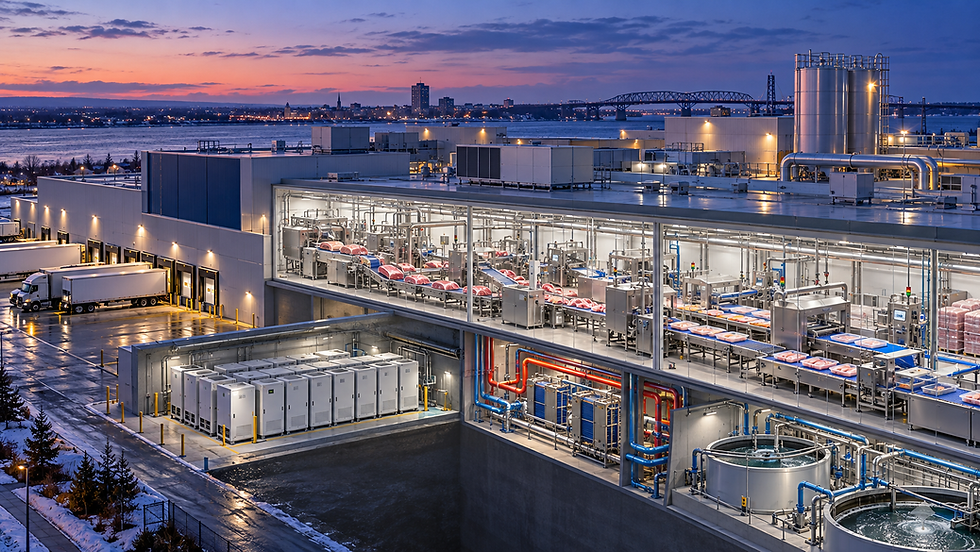
Editorial photograph: TECNIC Bioprocess Solutions, industrial bioprocess validation equipment, https://unsplash.com/photos/YvQJI4M513c . Reused under the Unsplash License. Contextual photograph taken in Spain, not an image of the named facility.


Comments