

Arafura Starts Nolans Construction With A$1.2 Billion in Government Backing

Construction has begun on Arafura Rare Earths’ Nolans mine and processing project in Australia’s Northern Territory, moving one of the country’s most strategically important mineral developments from financing into physical delivery.
The Australian government said on October 8 that work had started at the site, 135 kilometres north of Alice Springs. It has committed A$1.2 billion through the Northern Australia Infrastructure Facility, the Critical Minerals Facility, the National Reconstruction Fund and the Critical Minerals Strategic Reserve.
Export-credit agencies from the United States, Canada, South Korea and Germany are also participating alongside private capital. That international financing structure shows why Nolans matters beyond a single mining company: governments and manufacturers want more rare-earth supply outside the dominant Chinese refining system.
What changed
Arafura reached its final investment decision in May 2026. The October groundbreaking turns that corporate approval into a construction project, with earthworks, infrastructure and plant delivery now moving ahead.
The government expects about 600 jobs during construction and more than 350 permanent roles once the operation is running. Nolans is designed as an integrated ore-to-oxide project, meaning material will be mined and separated into saleable rare-earth oxides in Australia rather than exported only as an unprocessed concentrate.
That distinction is commercially important. Processing captures more value, creates a more technically skilled workforce and gives buyers a clearer alternative supply chain for magnet materials.
The production target
Arafura says Nolans is designed to produce 4,440 tonnes a year of neodymium-praseodymium oxide, usually shortened to NdPr. These two rare-earth elements are used in high-strength permanent magnets for electric vehicles, wind turbines, industrial motors, electronics and defence equipment.
The project is also designed to produce 470 tonnes a year of a mixed middle and heavy rare-earth oxide product. Australia’s government estimates Nolans could supply roughly 4% to 5% of global rare-earth demand once operating.
That forecast is a project target, not current production. Construction and commissioning still have to be completed, the plant must reach its designed recovery rates, and output will need to ramp up before Nolans contributes at that scale.
Why government support is so large
Rare-earth projects face a difficult financing problem. Building a mine is only one part of the job; separation plants are capital-intensive, technically complex and exposed to volatile prices. New producers also compete with an established Chinese supply chain that has scale, processing expertise and long customer relationships.
Governments have therefore begun using loans, equity, export-credit guarantees and purchase commitments to reduce the risk. In the case of Nolans, Australia’s Critical Minerals Strategic Reserve helped the project reach its final investment decision by supporting demand for part of the planned production.
The result is a public-private financing model with participation from several allied countries. For customers, that spreads political and financial risk. For Arafura, it provides the capital and market commitments needed to build a processing complex that would be difficult to fund through ordinary commercial debt alone.
Who is likely to buy the material
Arafura has previously announced supply agreements tied to buyers including Hyundai Motor Group, Kia, Siemens Gamesa and commodity trader Traxys. Their interest connects Nolans directly to electric-vehicle, wind-power and industrial supply chains.
The project’s location also matters. Mining and processing at one inland Australian site should reduce the number of cross-border steps between ore extraction and separated oxide. Finished material can then move to magnet and component manufacturers in partner markets.
What to watch next
The most important tests are now delivery, cost control and timing. Large remote industrial projects can face labour shortages, logistics delays, equipment bottlenecks and construction-cost inflation. Arafura must also demonstrate that its separation plant can achieve commercial output consistently, not just complete physical construction.
Rare-earth prices are another risk. A diversified supply chain has strategic value, but the project still needs sustainable economics. Long-term contracts and government purchasing can soften price volatility, yet they do not remove operating or market risk.
For the Northern Territory, the immediate effect is construction employment and procurement. The longer-term prize is a processing industry that exports a higher-value product rather than only mined material.
For global buyers, the consequence is more significant: Nolans is one of the few advanced projects intended to add fully separated magnet-rare-earth supply outside China. The start of construction does not solve the concentration problem, but it turns a policy ambition into a plant that can be measured against a delivery schedule.
Primary sources
Australian Government, “Construction starts on Arafura Rare Earths Project,” October 8, 2026: https://www.minister.industry.gov.au/t-ayres/media/construction-starts-arafura-rare-earths-project
Arafura Rare Earths, Nolans project overview and project update: https://www.arultd.com/projects/nolans/ and https://www.arultd.com/projects/nolans/project-update/
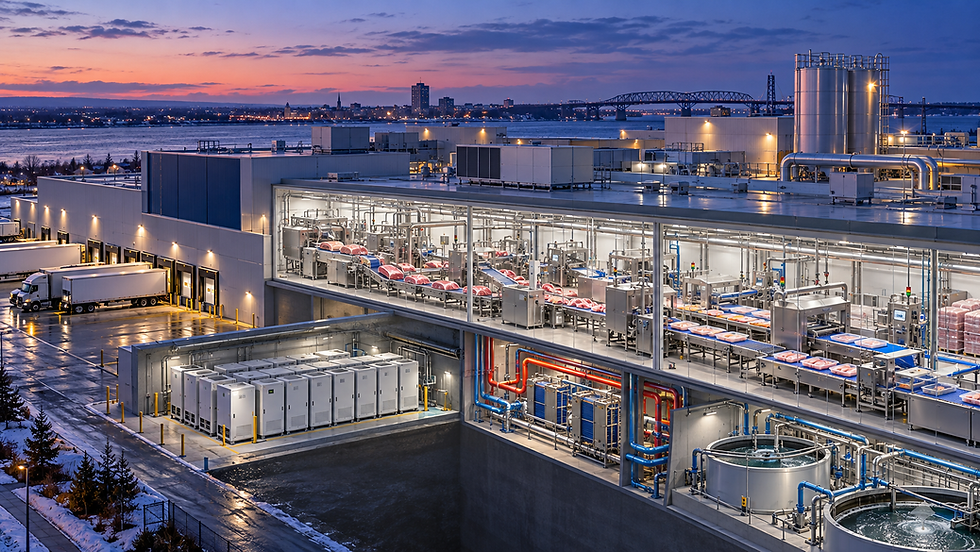
Cover image: OpenAI-generated editorial visualization created for Agrilinkage. It represents an Australian rare-earths construction project and does not depict the actual Nolans site.


Comments