
U.S. Beef Import Plan Filled Just 37.5% of Its First 100,000-Ton Window
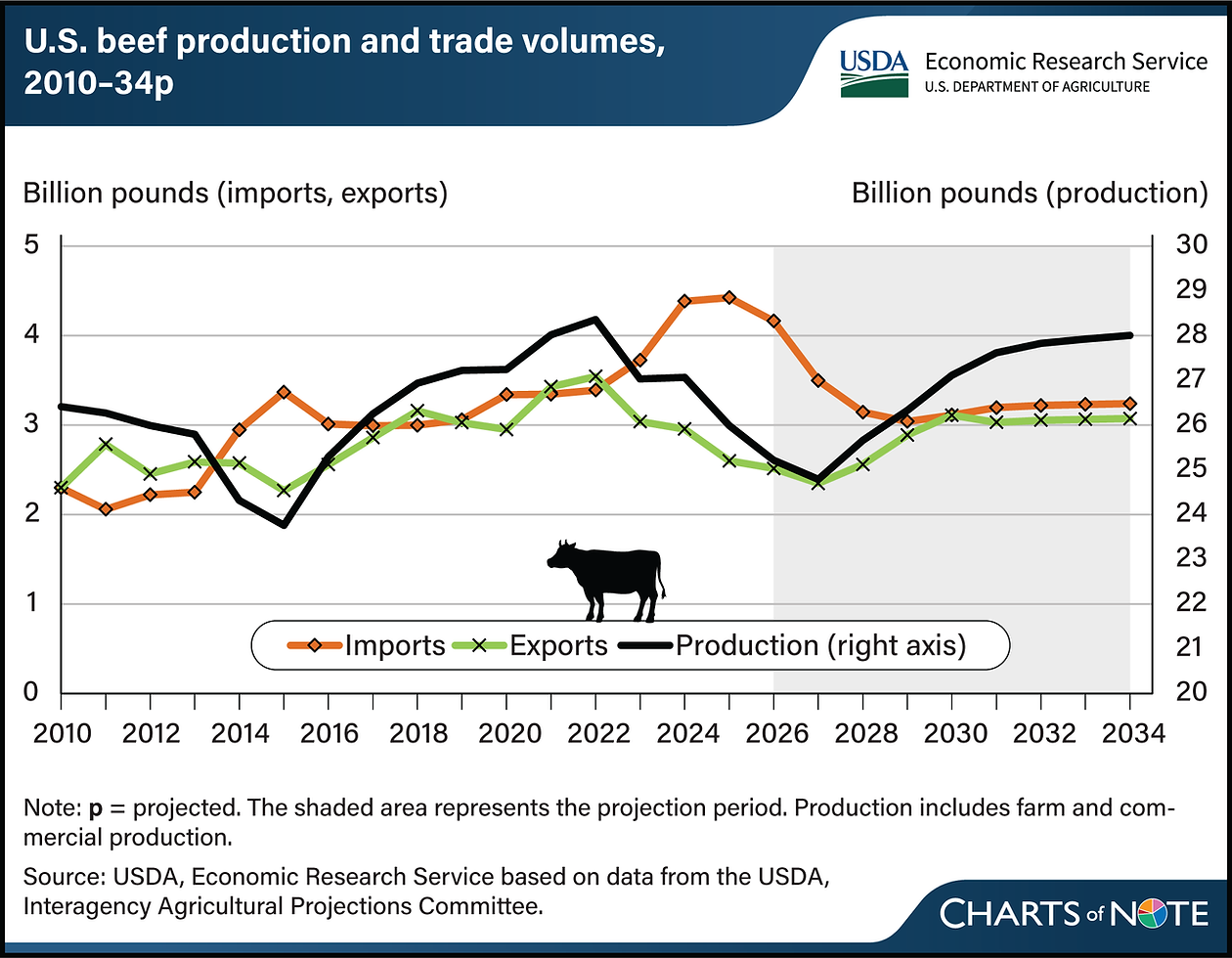
The United States opened a temporary 100,000-metric-ton beef import window in September as part of a plan to increase supply and ease pressure on consumer beef prices. By the end of the month, most of that quota had not been used.
An analysis published October 6 by the Agricultural and Food Policy Center’s Southern Ag Today project found that 37,486 metric tons had entered under the first tranche by September 28, equal to 37.5% of the available 100,000 tons.
The unused quota matters because the policy was designed around much larger potential volumes
The August presidential proclamation created an additional 300,000 metric tons of in-quota beef access, divided into three 100,000-ton monthly windows running from September through November. The second tranche opened October 1.
The temporary program mainly covers lean beef trimmings from countries that do not already have separate treatment under the U.S. beef quota system. Canada and Mexico are outside the quota framework, while Argentina, Australia, New Zealand and Uruguay have country-specific arrangements.
Not all quota imports are necessarily extra beef
Researchers cautioned that some meat entering through the temporary quota may have arrived in the United States anyway, but under a different tariff treatment. That means quota entries cannot simply be treated as a one-for-one increase in total U.S. beef supply.
Using two different approaches, the analysis estimated that genuinely additional September imports may have been between roughly 8,000 and 22,000 metric tons, far below the 100,000 tons available in the first tranche.
There was no noticeable retail price drop yet
The researchers also found no noticeable change in retail beef prices during the first month. That is not necessarily surprising: imported lean beef still has to be processed, blended, distributed and sold before any supply effect can reach supermarket prices.
The result illustrates the gap between opening an import quota and actually increasing food supply. The U.S. can authorize hundreds of thousands of tons of lower-tariff access, but exporters still have to supply the meat and the additional volume has to be large enough to affect a market constrained by tight domestic cattle supplies.




Comments