

Thanksgiving Dinner Cost Rises 6 Percent Across the United States

By Agrilinkage Research Desk | Published 19 November 2026 | Price survey and official data analysis
The cost of a traditional United States Thanksgiving dinner for ten people has risen to 58.63 dollars, up more than 6 percent from 2025, according to the American Farm Bureau Federation survey released on 18 November. Turkey was the largest driver of the increase.
The basket remains 5.42 dollars, or 8.5 percent, below its record of 64.05 dollars in 2022. That means the latest increase is a setback for household food budgets, but not a return to the peak reached during the earlier inflation shock.
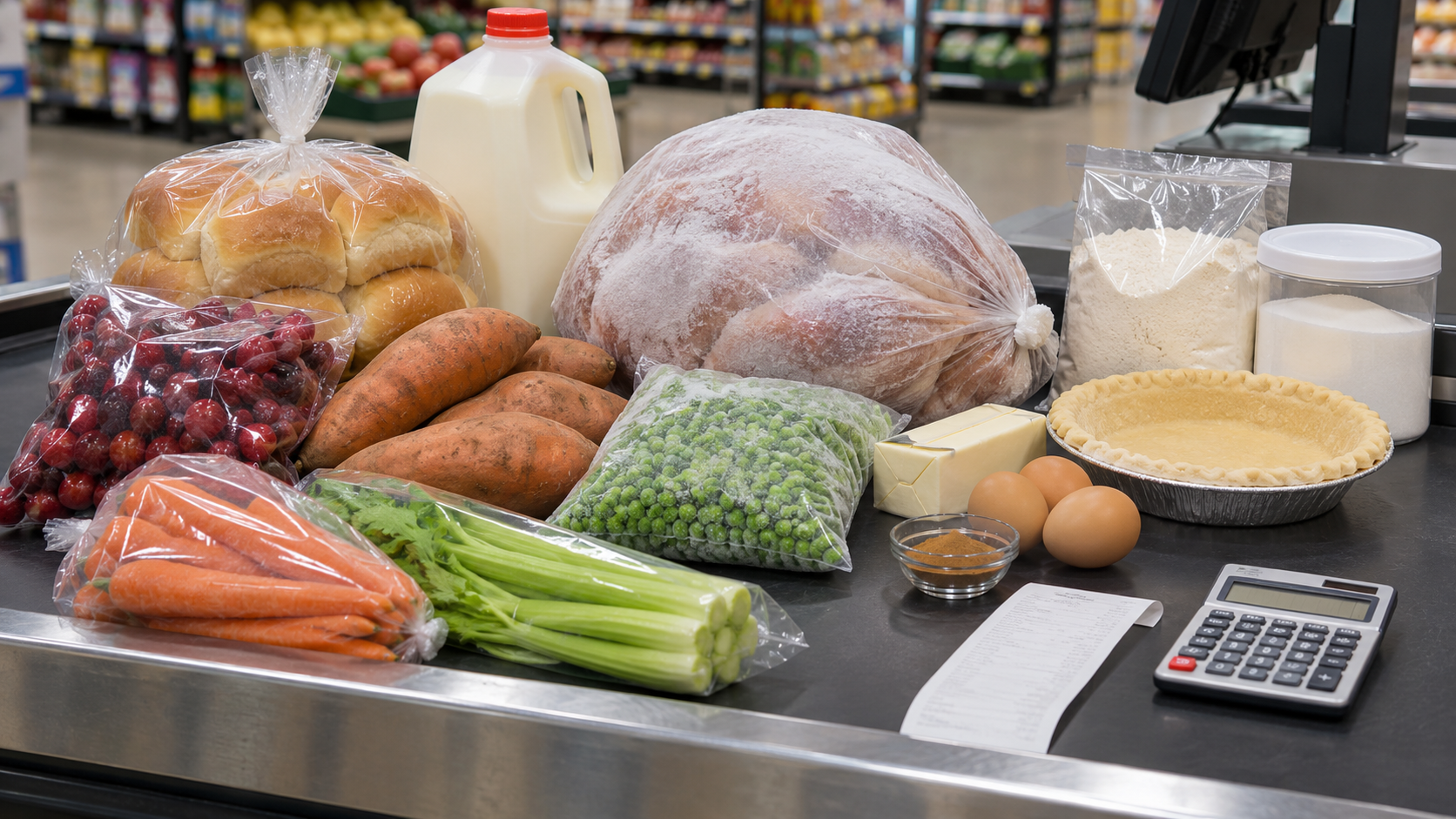
Original editorial illustration by Agrilinkage. It does not depict a specific store or survey location.
Turkey led the increase
The Farm Bureau survey priced a fixed menu that the organisation has tracked since 1986. A 16 pound frozen turkey averaged 23.68 dollars, or 1.48 dollars per pound. That was 10.1 percent higher than last year and accounted for much of the basket increase.
Whole milk rose 8.6 percent to 4.05 dollars per gallon. Fresh cranberries increased 8.8 percent to 2.48 dollars per bag, dinner rolls rose 7 percent to 3.81 dollars per dozen, and sweet potatoes increased 5 percent to 4.20 dollars for three pounds. Stuffing mix and the miscellaneous ingredients used to prepare the meal also became more expensive.
Some items moved in the opposite direction. The celery and carrot tray fell 3.7 percent, frozen pie crusts declined 2.7 percent, frozen peas fell 2 percent, and whipping cream decreased 1.6 percent. The basket therefore shows a mixed food market rather than a uniform price rise across every category.
The regional gap reached more than seven dollars
The classic meal was cheapest in the South at 54.33 dollars. It averaged 56.89 dollars in the Midwest, 58.74 dollars in the West, and 61.57 dollars in the Northeast. The difference between the South and Northeast was 7.24 dollars for the same listed meal.
The regional spread matters for retailers and food manufacturers because national averages can conceal different transport costs, store competition, labor expenses, distribution structures, and promotional strategies. It also means that a household may face a very different checkout total from the headline number even when buying the same menu.
The basket increase fits a broader monthly rise in grocery prices
The latest United States Bureau of Labor Statistics consumer price report showed the food at home index rising 0.4 percent in October. Meat, poultry, fish, and eggs increased 0.5 percent during the month, while dairy and related products rose 0.6 percent. Those official indexes cover a much broader set of purchases than the Thanksgiving survey, so the two measures should not be treated as identical.
Farm Bureau attributed the higher turkey price to strong demand, tighter inventories, production costs, and a turkey population that is still recovering from disease pressure. Retail promotions can reduce what shoppers actually pay. Some volunteer shoppers reported turkey offers as low as 69 cents per pound, less than half the national survey average.
Higher retail prices do not flow directly to farms
A higher grocery bill is not the same as a matching increase in farm income. The United States Department of Agriculture Food Dollar data show that the gross farm share was 12.6 cents of each dollar spent on domestically produced food in 2025. Processing, packaging, transport, wholesale, retail, energy, and other services account for most of the remaining value.
That distinction is particularly important for turkey, dairy, and bakery products. A retail price can rise while producers also face higher feed, diesel, fertilizer, electricity, labor, veterinary, and financing costs. The direction of the shelf price alone does not reveal the producer margin.
What shoppers and food businesses should watch
Consumers may find the largest savings through turkey promotions and by comparing regional or store offers. For retailers, the survey highlights the importance of traffic building discounts on the centrepiece product while managing higher costs across milk, bakery, cranberries, and other frequently paired items.
For processors and suppliers, the useful signal is the composition of the increase. Poultry supply and production costs appear more important than a general rise in every ingredient. Future turkey inventory data, disease conditions, feed costs, and promotional intensity will show whether the pressure persists beyond the holiday season.
Sources and methodology
Agrilinkage reviewed the American Farm Bureau Federation release and detailed market analysis, the October consumer price report from the Bureau of Labor Statistics, and the latest Food Dollar findings from the Department of Agriculture. The Farm Bureau measure is an informal volunteer survey of a fixed holiday menu, not a government price index or a complete measure of every household meal. No interviews or firsthand shopping tests were conducted.



Comments