

Carrefour Will Renovate 100 French Hypermarkets and Shift Floor Space by 2030

By Agrilinkage Research Desk | Published 19 November 2026 | Company strategy and retail operations analysis
Carrefour plans to renovate more than 100 major French hypermarkets and reallocate 5 to 10 percent of selected store floor space by 2030 as it tries to make the large store format more productive and more relevant to changing food shopping habits.
The strategy, presented on 17 November, will expand parapharmacy areas to 150 hypermarkets, introduce pet care concepts in 100 stores, add new frozen food spaces, and direct more room toward categories with stronger sales potential.
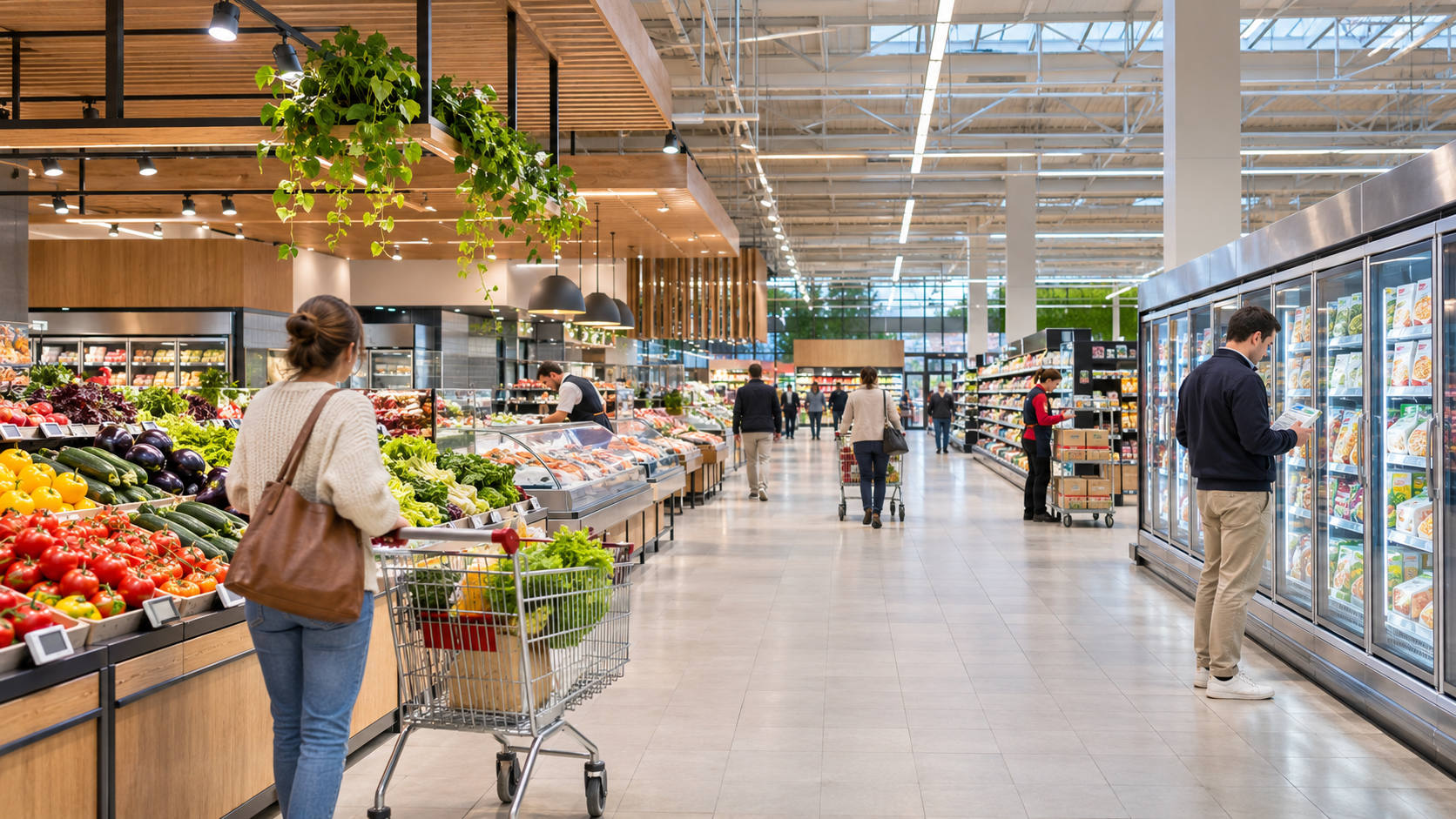
Original editorial illustration by Agrilinkage. It does not depict a specific Carrefour store.
Why the plan matters
Carrefour operates 302 hypermarkets in France. According to its official strategy release, the format generates close to 20 billion euros in sales, nearly half of Carrefour France revenue, employs 80,000 people, and serves more than 1.3 million customers each day.
Carrefour says 70 percent of French households shop in a hypermarket at least once a month. Those numbers explain why changes to this format can influence food suppliers, packaging demand, cold storage, merchandising, retail media, and the availability of shelf space across the French consumer market.
Floor space will move toward faster growth categories
The company plans to shift 5 to 10 percent of floor space in selected stores toward categories it considers more promising. Fresh food, self service food, frozen products, pet care, personal care, beauty, home products, sport, and services are among the areas identified in its wider Carrefour 2030 plan.
For food companies, the reallocation creates both opportunity and pressure. New frozen food spaces can support greater variety and higher throughput, but they also require refrigeration capacity, energy, reliable temperature control, and packaging suited to longer frozen distribution. Fresh departments demand faster replenishment and tighter waste management.
Suppliers in categories losing space may face harder negotiations over listings, sales performance, promotion, and the amount of shelf area assigned to each product. Carrefour has not published a store level map showing exactly which categories will gain or lose space, so the impact cannot yet be calculated for individual suppliers.
More than 100 stores will receive full renovations
The Carrefour 2030 strategy presentation sets out annual investment of about 200 million euros for modernising French hypermarkets. The latest release says more than 100 reference stores will be fully renovated by 2030.
The programme is intended to improve store appearance, commercial productivity, customer movement, and the use of large properties. The investment figure covers the broader modernisation plan rather than a disclosed construction budget for each of the 100 stores. No complete timetable or list of locations was provided in the release.
Personalised promotions will take a larger role
Members of Club Carrefour now account for nearly 70 percent of hypermarket sales, according to the company. Carrefour intends to double personalised promotions by 2030 and says their return on investment is at least twice that of conventional promotions.
That shift makes customer data and targeted offers more important to food brand performance. Suppliers may gain more precise ways to reach shoppers, but they will also need to judge whether targeted promotions generate additional purchases or merely discount sales that would have happened anyway. The return figure is Carrefour's own measurement and no underlying calculation was published in the release.
Technology will reach shelves and online orders
Carrefour is using artificial intelligence to support pricing decisions and plans to deploy the Vusion platform across its French hypermarkets by 2029. Electronic shelf systems, inventory visibility, shelf monitoring, and online order preparation can reduce manual work and improve product availability when the underlying product and stock data are accurate.
The company also wants stores to become stronger fulfilment points for online shopping. That can shorten the path between inventory and customer, but it adds operational competition for aisle space, picking labor, cold holding areas, and order staging. A store designed only for browsing may need different flows when it also acts as a local distribution hub.
What suppliers and competitors should watch
The plan should be judged by measurable outcomes rather than the number of concepts announced. Useful indicators include sales per square metre, food waste, energy use, stock availability, online order economics, customer traffic, and the performance of renovated stores compared with unchanged locations.
The strategy also tests whether the hypermarket can combine low prices and broad choice with the convenience and personalisation associated with smaller stores and online retail. If Carrefour succeeds, large stores may regain commercial relevance without returning to the space allocation of earlier decades. If customers do not respond, shifting floor space will only redistribute costs inside an oversized format.
Sources and methodology
Agrilinkage reviewed Carrefour's 17 November hypermarket strategy release and its Carrefour 2030 strategy presentation. Company targets and performance claims are identified as such. Agrilinkage did not conduct store visits, interviews, or independent measurement of the planned return on investment.



Comments