
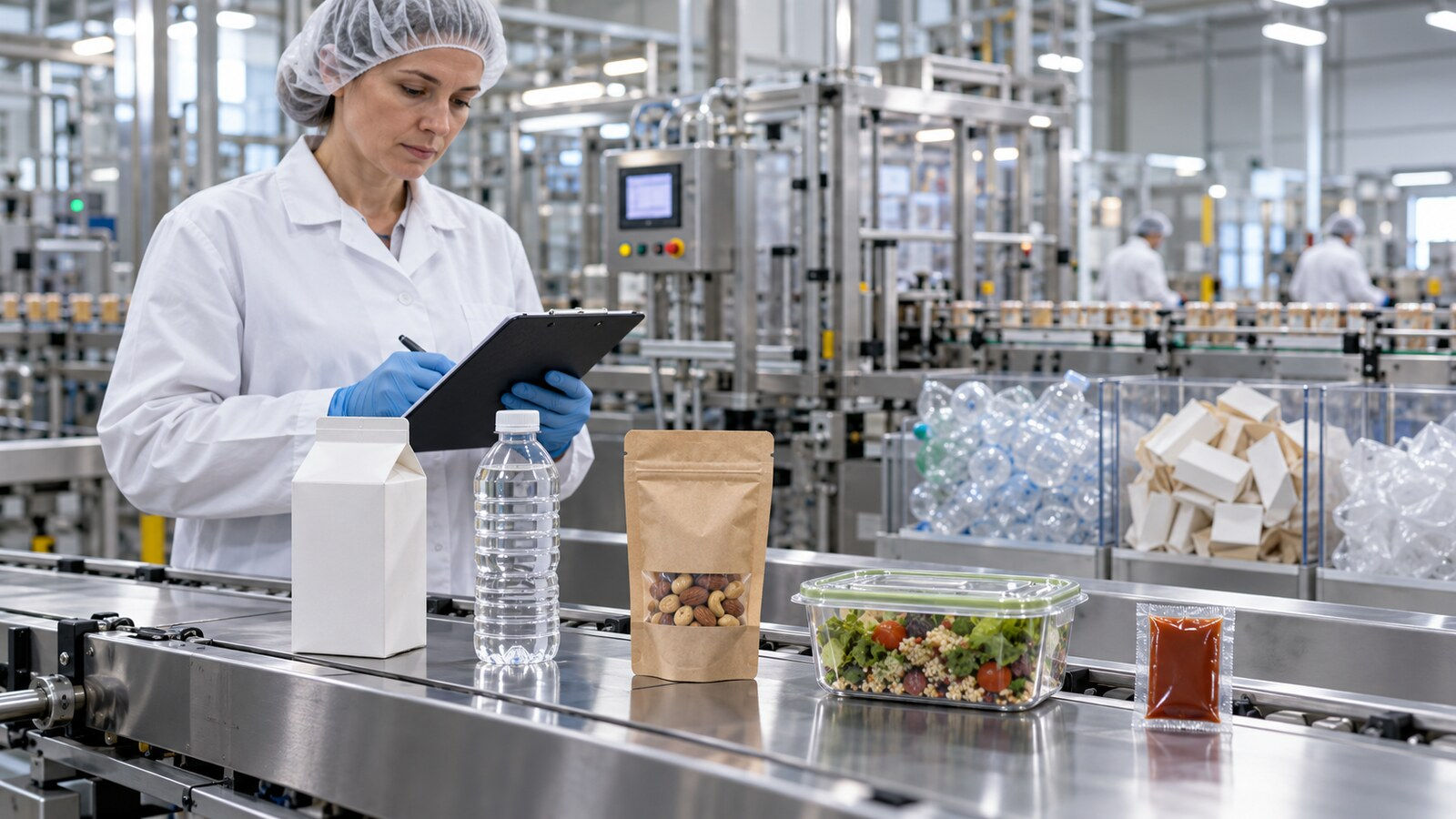
EU Food Packaging Rules Now Apply: What Brands Must Change Before 2030

The European Union’s Packaging and Packaging Waste Regulation now applies across the bloc, changing the design and compliance path for packaging used by food manufacturers, beverage companies, retailers, restaurants and importers. The regulation, usually shortened to PPWR, entered into force on 11 February 2025 and began applying on 12 August 2026.
Its direction is clear: less packaging, more reusable and recyclable formats, higher use of recycled plastics where food-safety rules allow it, tighter controls on hazardous substances and fewer single-use formats. But the timetable is more complicated than the slogan. Several important requirements are phased toward 2030, and some technical tests still depend on standards, delegated acts or implementing rules that the European Commission has not yet completed.
For food businesses, the practical task is therefore not to replace every package immediately. It is to identify which formats will become difficult or illegal to sell, collect evidence from suppliers, reserve time for shelf-life and food-contact testing, and align redesign work with filling-line and procurement cycles.
What the EU packaging regulation covers
The PPWR applies to packaging placed on the EU market regardless of material or origin. That means it reaches domestic manufacturers and also overseas suppliers selling packaged food or beverages into the European Union. It covers primary packs around products, grouped packaging, transport packaging and e-commerce packaging, although individual obligations differ by format and use.
The regulation replaces the older Packaging and Packaging Waste Directive with a directly applicable EU regime. The aim is to reduce fragmented national rules while making packaging safer and more circular. The European Commission says packaging waste reached 186.5 kilograms per person in the EU in 2022, while packaging accounts for about 40% of plastics used in the bloc.
Food packaging sits at the difficult centre of the transition. It must protect products from contamination, damage, moisture and oxygen, support traceability and preserve shelf life. Those functions can conflict with efforts to reduce material or increase recycled content. The PPWR recognises food safety, but it also requires companies to justify and document why a particular package needs its materials, layers, weight and volume.
Recyclability by 2030 does not mean one test applies today
The regulation’s headline objective is that all packaging placed on the EU market should be recyclable by 2030. In practice, companies will need to work with design-for-recycling criteria and performance grades that are still being completed through delegated legislation and technical standards.
The Commission’s guidance makes an important timing point. Once the delegated act establishing design-for-recycling criteria under Article 6 enters into force, manufacturers will have 24 months to comply. If that act enters into force after 1 January 2028, the requirements apply 24 months after its entry into force rather than automatically on the first day of 2030.
Manufacturers also do not yet need to complete the PPWR recyclability conformity-assessment procedure under Article 38 and Annex VII. That duty starts only when the relevant delegated act is in force. This is not permission to wait. Packaging projects often need long validation cycles, especially when a new material affects sealing, barrier performance, migration, line speed or product shelf life.
A food company should already be asking whether each component can be separated, sorted and recycled at scale in the markets where it sells. Dark pigments, mixed polymers, adhesives, coatings, labels, closures and multilayer structures can all change the outcome. A package described as technically recyclable in a laboratory may still perform poorly if collection and sorting systems cannot handle it.
Food-contact recycled plastic has a safety limit
The PPWR sets minimum recycled-content targets for parts of the plastic-packaging market, with stronger targets later in the transition. Food-contact packaging, however, must also comply with EU rules governing recycled plastic and materials intended to touch food.
The Commission confirms that an exemption can apply where the amount of recycled plastic would threaten human health and make the packaged product non-compliant with food-contact law. The exemption is not a general escape route for every food package. It is tied to safety and legal compliance, so businesses will need evidence about the material, recycling technology, intended food, contact conditions and migration risk.
The regulation also excludes a plastic part representing less than 5% of the total weight of the whole packaging unit from the recycled-content obligation. That threshold should not be confused with other 5% tests in the PPWR. Similar numbers appear in different provisions but answer different legal questions.
By 1 January 2028, the Commission must assess whether suitable recycling technologies are authorised and sufficiently available for specific contact-sensitive plastic packaging. That review can lead to targeted changes or derogations. Food companies using non-PET structures should monitor it closely because availability of authorised recycled material varies by polymer and application.
PFAS restrictions reach food-contact packaging
The PPWR restricts per- and polyfluoroalkyl substances, commonly called PFAS, in packaging intended to contact food when specified concentration limits are exceeded. These chemicals have been used in some grease-, oil- and moisture-resistant applications.
Compliance requires more than asking whether a supplier intentionally added PFAS. Businesses need specifications and declarations that address the regulated thresholds and the actual construction of the package. Paper-based items can contain functional coatings or treatments that are not obvious from the base material description.
Procurement teams should identify high-risk formats first, including grease-resistant wraps, moulded fibre, bakery papers, fast-food packaging and other treated food-contact materials. Laboratory testing may be necessary where supplier documentation is incomplete or where the composition has changed during reformulation.
Packaging minimisation becomes a design requirement
From 1 January 2030, manufacturers and importers must ensure that packaging weight and volume are reduced to the minimum needed for functionality. The regulation targets characteristics that exist only to make a product appear larger, including unnecessary layers, double walls and false bottoms.
The Commission says marketing and consumer acceptance are no longer valid performance criteria for justifying extra packaging. Other needs can still matter, including product protection, manufacturing processes, logistics, information, hygiene, safety, legal requirements, recyclability, recycled content and reuse.
This shifts the redesign conversation. A large carton cannot be defended simply because shoppers expect a bigger box. A company should be able to explain which function the material performs and why a lighter or smaller design would fail. That explanation will need technical evidence rather than a brand preference.
The existing standard EN 13428:2004 remains relevant guidance through the transition. The Commission is asking European standardisation body CEN to update the method by 12 February 2027 and to develop maximum adequate weight and volume limits for common packaging types and formats.
The 50% empty-space rule is narrower than it sounds
The PPWR sets a maximum empty-space ratio of 50% for grouped packaging, transport packaging and e-commerce packaging. The rule applies from 1 January 2030 or three years after the relevant implementing act enters into force, whichever is later. The Commission must establish the calculation method before 12 February 2028.
The obligation concerns the operator filling those packaging types. It is not a universal instruction that every retail food pack must be half full or more. Product settling, protective materials and the difference between sales and transport packaging need to be handled under the final calculation method.
For online grocery, meal kits and direct-to-consumer food brands, the rule makes parcel optimisation a compliance issue as well as a freight-cost issue. Companies will need box-selection systems, reliable product dimensions and packing processes that limit unnecessary voids without increasing breakage, temperature loss or food waste.
Some single-use food formats face bans in 2030
From 1 January 2030, the PPWR prohibits specified single-use plastic packaging formats and uses listed in Annex V. The food-related restrictions include certain small packaging for condiments, preserves, sauces, coffee creamer, sugar and seasoning in hotels, restaurants and catering, subject to the exact scope and exceptions in the regulation.
The Commission has clarified that these bans are not limited to items made of 100% plastic. Paper-based composite packaging containing 5% or more plastic can fall within the relevant single-use plastic packaging restrictions. Adding a token amount of paper or another material does not automatically remove a format from the ban.
Companies should review sachets, portion packs and coated paper items by use case, not only by material name. Whether a pack is used for on-premise service, takeaway food, hygiene or another purpose can change the legal result. A package supplier’s broad “paper-based” description is not enough to determine compliance.
Reusable packaging must work as a system
The regulation promotes reuse and refill, but a package is not reusable simply because it survives a second trip. It must be designed for repeated rotations, capable of being emptied and refilled safely, and supported by collection, cleaning, inspection and redistribution systems.
Food safety remains decisive. Reusable packaging must maintain hygiene and product quality, tolerate reconditioning and allow the information needed for traceability and safe use. A heavier reusable container can make environmental and commercial sense only if the system achieves enough rotations and keeps losses under control.
The Commission is due to establish minimum rotation numbers for frequently used reusable formats. Until those details are final, foodservice and retail projects should model return rates, wash capacity, transport distance, breakage, contamination, storage and customer behaviour instead of comparing containers only by material weight.
What food manufacturers should do now
Start with a complete packaging register. For every product and market, record the pack’s function, material composition, component weights, food-contact status, supplier, format, sales channel and whether it is primary, grouped, transport or e-commerce packaging. Include labels, closures, coatings, adhesives and inserts rather than documenting only the main container.
Next, rank the formats by regulatory and operational risk. Priority candidates include hard-to-recycle multilayers, PFAS-treated food-contact materials, small single-use portions, oversized boxes, packages with high void space and formats that depend on recycled polymers with limited authorised supply.
Ask suppliers for evidence that can survive an audit: material specifications, food-contact declarations, migration results, recycled-content documentation, PFAS information, design-for-recycling assessments and change-control procedures. Marketing statements such as “eco”, “recyclable” or “paper-based” are not substitutes for technical records.
Build redesign into equipment planning. A lighter bottle, different sealant or mono-material pouch can affect forming, filling, sealing, sterilisation, coding, inspection, case packing and pallet stability. Packaging compliance is therefore a joint project for regulatory, procurement, engineering, quality, logistics and commercial teams.
Finally, preserve decision dates. Some technical requirements are not final, so companies need a monitored compliance plan rather than one frozen interpretation. Record which Commission guidance, delegated act, standard or supplier specification supported each decision and update the file when those inputs change.
The commercial consequence
The PPWR will reward companies that can redesign early without damaging shelf life, food safety or line efficiency. It will also expose weak packaging data. Businesses that do not know the exact composition of their formats will struggle to calculate recycled content, assess a 5% threshold, prove minimisation or determine whether a single-use ban applies.
For packaging suppliers and equipment manufacturers, the regulation creates demand for validated recyclable structures, low-material formats, reuse systems, inspection tools, traceability and flexible machinery. For food brands, the advantage is less about making a vague sustainability claim and more about avoiding rushed conversions, stranded packaging stock and last-minute production disruption.
The EU rules are already part of the operating environment, but 2030 is the critical design horizon. The safest strategy is to treat the next three years as an engineering and evidence-building window: reduce avoidable material, resolve food-contact risks, test alternatives on real lines and keep enough flexibility to absorb the technical rules still to come.
This guide is based on Regulation (EU) 2025/40 and the European Commission’s 2026 PPWR guidance and frequently asked questions. It explains the general framework and does not replace product-specific legal advice. Cover image: original AI-generated editorial visual by Agrilinkage/OpenAI.


Comments