
Energy Transfer Buys Vaquero Midstream for $2.625 Billion

Energy Transfer has agreed to acquire Vaquero Midstream in a cash-and-unit transaction valued at approximately $2.625 billion, adding a fast-growing natural gas gathering and processing system in the Delaware Basin to one of the largest energy infrastructure networks in the United States.
The definitive agreement, announced on October 6, 2026, calls for $1.95 billion in cash and roughly 33.3 million newly issued Energy Transfer common units. The companies expect the transaction to close in the fourth quarter of 2026, but it remains subject to regulatory approval and customary closing conditions.
What Energy Transfer is buying
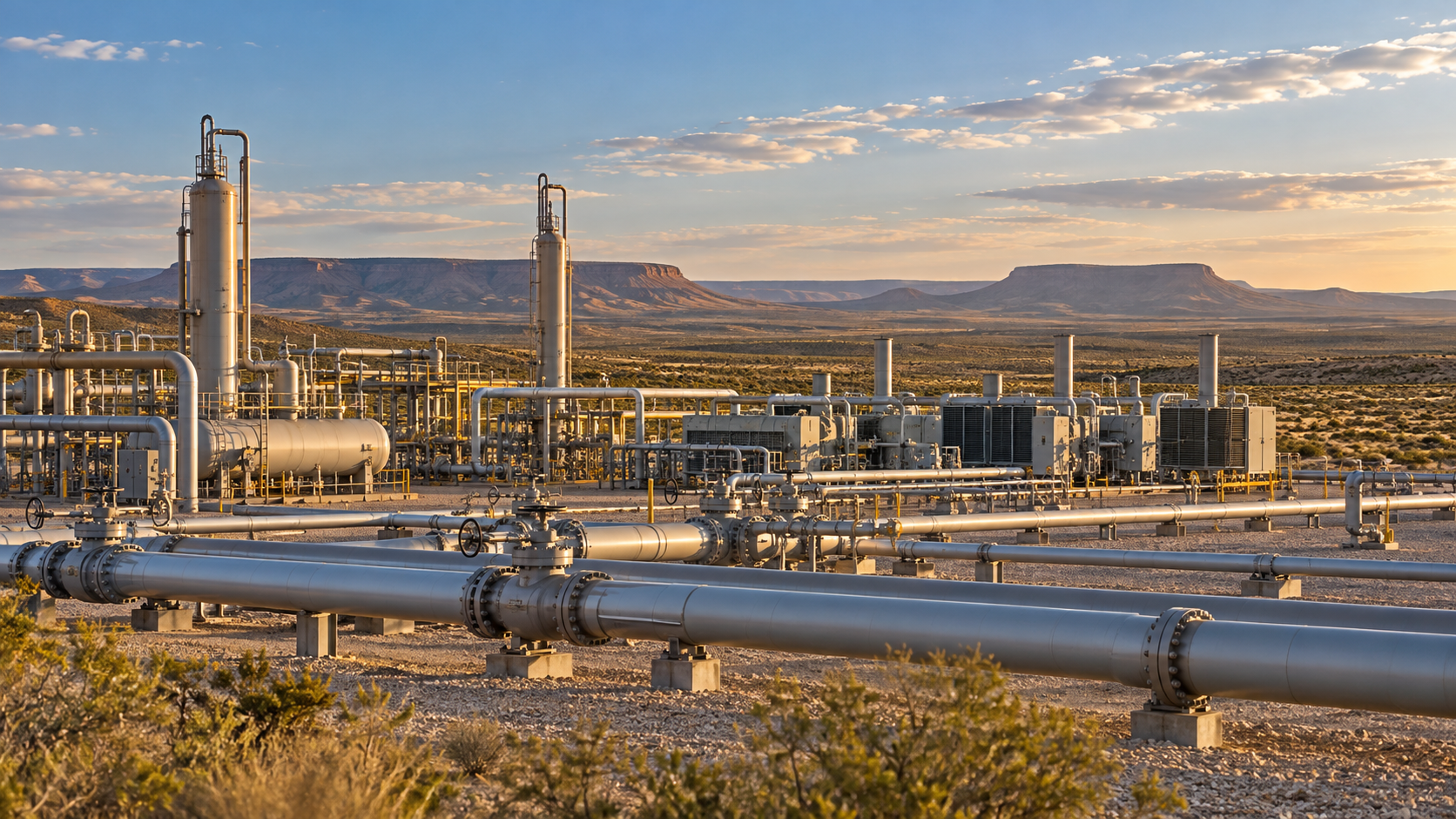
Vaquero’s system includes about 300 miles of pipelines serving Loving, Reeves, Ward and Winkler counties in West Texas. Its Caymus Processing Complex has three processing trains with combined capacity of approximately 675 million cubic feet per day, according to Energy Transfer’s announcement.
The asset package also includes land that could support two additional processing trains. If both were built, total processing capacity could rise to approximately 1.2 billion cubic feet per day. That expansion is an option described by the buyer, not a completed or financed project.
Energy Transfer said Vaquero’s system is backed by fee-based contracts, approximately 100,000 dedicated acres and customers whose contracts have an average remaining life of about 10 years. Those details matter because they give the buyer a stream of contracted midstream volumes rather than a pure bet on daily commodity prices.
Why the network fit matters
Vaquero’s assets are already connected with Energy Transfer’s natural gas and natural gas liquids infrastructure. The buyer expects those connections to feed additional volumes into its transportation, fractionation, terminal and export businesses.
Gas produced alongside oil in the Delaware Basin must be gathered, treated and processed before residue gas and natural gas liquids can reach downstream markets. Owning more of that chain can give Energy Transfer several opportunities to earn fees from the same production stream.
Energy Transfer currently operates approximately 140,000 miles of pipelines and associated infrastructure across 44 states. Adding Vaquero would deepen its position in the Permian region rather than take it into a new geography.
A capacity purchase in an active basin
As Delaware Basin operators develop deeper formations and produce more associated gas, gathering and processing constraints can become as important as oil takeaway capacity. Vaquero has recently expanded its system with a third processing train and additional pipeline capacity, giving Energy Transfer an operating platform rather than an early-stage project.
The current 675 MMcf/d figure in the acquisition announcement is higher than the 600 MMcf/d nameplate total associated with three 200 MMcf/d trains reported when the latest expansion entered service. The difference reflects the approximately stated capacity in the transaction materials; readers should not treat the potential 1.2 Bcf/d build-out as current capacity.
Financing and transaction risk
Energy Transfer said it expects the acquisition to be immediately accretive to distributable cash flow per common unit. That is a company forecast, not a guaranteed result. The final economics will depend on regulatory clearance, closing timing, integration, customer activity and the ability to capture downstream volumes across the wider network.
The mix of cash and newly issued units spreads the purchase price between funding and equity. The 33.3 million units will add to the partnership’s outstanding unit count, while the $1.95 billion cash component will require funding from available liquidity or capital markets.
Until the transaction closes, Vaquero remains a separate business. The announcement is a signed acquisition agreement—not a completed transfer of ownership—and the proposed capacity expansions remain future options rather than committed operating assets.
What to watch next
The immediate milestones are regulatory review, financing and a confirmed closing date. After closing, the key operational questions will be how quickly Energy Transfer integrates Vaquero’s contracts and flows, whether it advances either potential processing train, and how much additional natural gas liquids volume reaches the company’s fractionation and export network.
For producers, the deal could place more Delaware Basin gathering and processing capacity inside a much larger downstream system. For Energy Transfer investors and customers, it is a $2.625 billion test of whether owning more connected infrastructure can convert growing Permian gas volumes into durable fee-based cash flow.


Comments