

Dangote Awards Key Reformer Contract for 3-Million-Tonne Ethiopia Urea Plant

Reporting and analysis by the Agrilinkage Companies & Investment Desk. Published 29 October 2026. This article is based on company, government and infrastructure documents linked below; no interviews or site visit were conducted.
Dangote Industries has awarded Técnicas Reunidas a contract to supply two hydrogen reformers for the planned Gode fertilizer complex in eastern Ethiopia, the Spanish engineering group announced on 28 October 2026. The award is a concrete equipment milestone for a project designed to produce 3 million tonnes of urea a year.
The contract covers design, procurement, manufacture and free-on-board supply of the reformers. Their combined hydrogen capacity will exceed 200,000 normal cubic metres per hour, and Técnicas Reunidas says delivery is required within 18 months. Topsoe is the process licensor. The contract value was not disclosed.
That wording matters. This is not a notice that the plant is complete, operating or even that all construction packages have been placed. Free-on-board supply generally ends when equipment is loaded for shipment at the named port, leaving transport, installation, integration, commissioning and performance testing as later steps.
Why the reformers are central to the plant
A hydrogen reformer is not a peripheral component. In a conventional natural-gas-based fertilizer chain, the reformer converts methane and steam into hydrogen-rich synthesis gas. The hydrogen is combined with nitrogen to make ammonia, and ammonia then reacts with carbon dioxide to make urea. Delays or underperformance at the reforming stage can therefore constrain the entire plant.
The two-unit configuration also aligns with the scale disclosed in earlier project documents. Saipem said in December 2025 that it had licensed two urea units for Ethiopia, each rated at 4,235 tonnes a day. Together that is 8,470 tonnes a day.
An Agrilinkage scale check shows why the nominal annual target is demanding. At the stated daily capacity, producing 3 million tonnes would require about 354 operating days in a 365-day year, equivalent to roughly 97 percent of calendar days. That is an illustrative arithmetic comparison, not a forecast of plant availability. Maintenance, feedstock interruptions and commissioning performance will determine actual output.
A large project, but the published cost figure is dated
Ethiopian Investment Holdings described the shareholder agreement in August 2025 as a 60 percent Dangote and 40 percent Ethiopian Investment Holdings venture. It put the initial project cost at no more than $2.5 billion and the planned build period at 40 months.
Those figures establish the original investment framework, not a verified current budget. Large process plants frequently change in scope and cost as engineering advances, contracts are placed and supporting infrastructure is added. Readers should not treat the 2025 ceiling as confirmed current spending without a newer audited or contractual breakdown.
The Ethiopian government reported in May 2026 that construction had been launched in October 2025. The project is intended to use gas from the Calub and Hilala fields. A separate government account of the foundation ceremony referred to a 108-kilometre gas pipeline.
Power infrastructure is advancing in parallel. Ethiopian Electric Power said the Gode substation had been prepared to serve the factory with a new transformer and related upgrades. The plant's economics will depend not only on the reformers but also on reliable gas, electricity, water, roads and outbound logistics.
What the project could change for fertilizer buyers
If the complex reaches dependable commercial output, its 3-million-tonne design capacity would be material for Ethiopia and neighbouring markets. Domestic production could reduce exposure to imported urea, foreign-exchange availability and long maritime supply chains. Regional exports could also add competition, although delivered prices will still depend on gas terms, plant efficiency, inland transport and cross-border logistics.
The benefit is therefore conditional. Nameplate capacity is not the same as saleable production, and commissioning a large ammonia-urea train can take time. Farmers will feel an effect only if output is produced reliably, distributed at the right season and priced competitively against imports.
The next evidence to watch
The reformer delivery window implies an equipment-supply milestone by roughly April 2028 if the 18 months are counted from the announcement date. That is an Agrilinkage date calculation, not an official commissioning target.
The most useful next disclosures would be the remaining engineering and construction awards, verified civil-works progress, pipeline completion, gas-supply terms, power availability, equipment delivery, mechanical completion and the first sustained production run. Until those milestones are documented, the latest contract should be read as meaningful progress rather than proof of completion.
Primary sources and methodology
Agrilinkage calculated the daily-to-annual capacity comparison and the indicative reformer-delivery date from the published figures. All calculations are labelled as illustrations and do not represent company guidance.
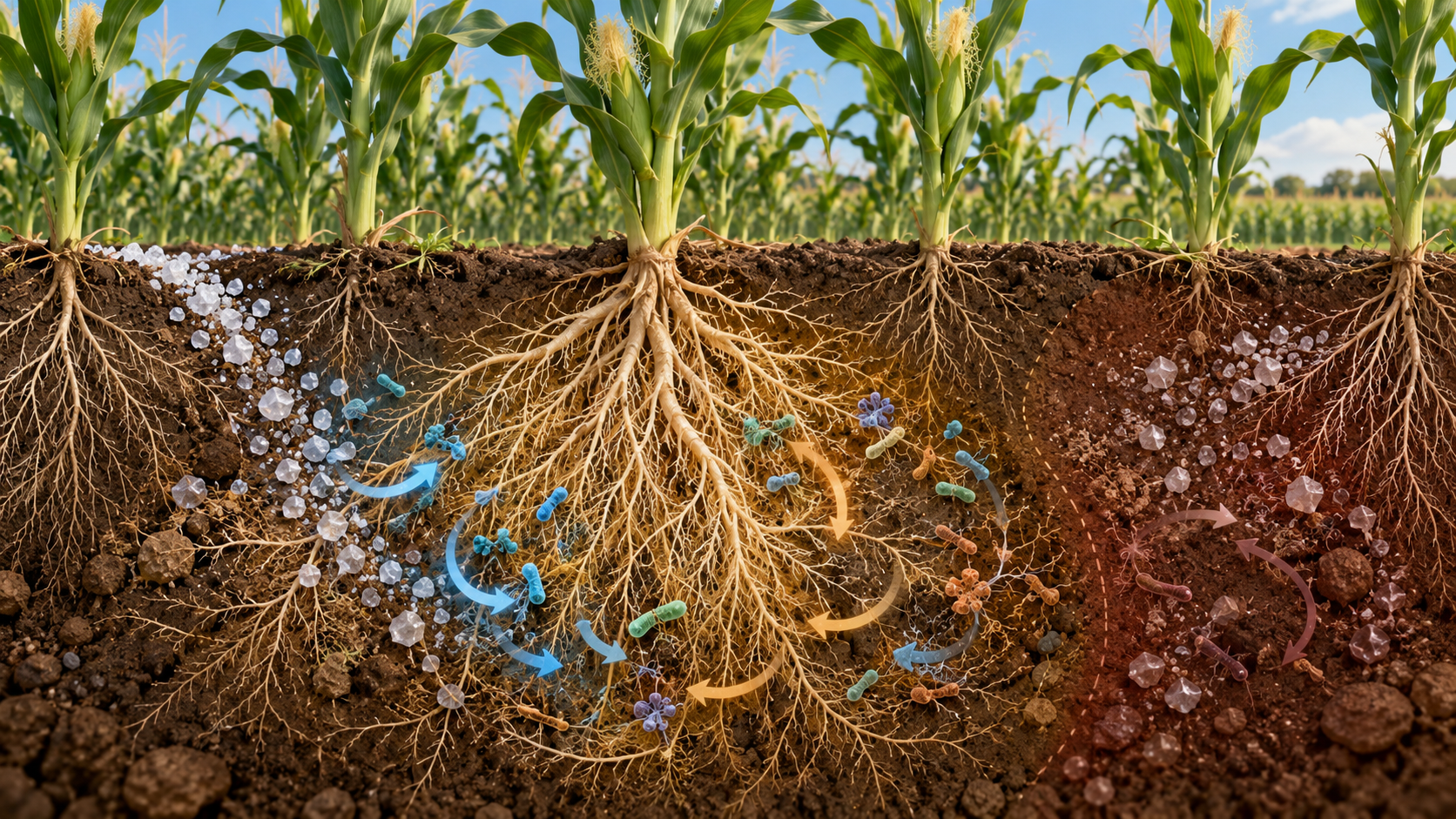
Image note: The cover is an original conceptual illustration created for Agrilinkage. It does not depict the actual Gode construction site or completed facilities.




Comments