
Profertil Plans $1.7 Billion Argentina Urea Expansion

Profertil has signed a cooperation agreement with the Municipality of Bahía Blanca for a proposed $1.7 billion expansion of its nitrogen-fertilizer complex at Ingeniero White, Argentina. The plan would add an integrated ammonia and granular-urea production train with 1.5 million tonnes of annual urea capacity.
The scale is consequential for South American agriculture, but the status matters just as much as the headline figure. Profertil is still completing the work that precedes a final investment decision, which the company expects in 2027. The municipal agreement supports permitting, employment and local-supplier coordination. It is not authorization to begin construction and it does not make the capital expenditure irrevocable.

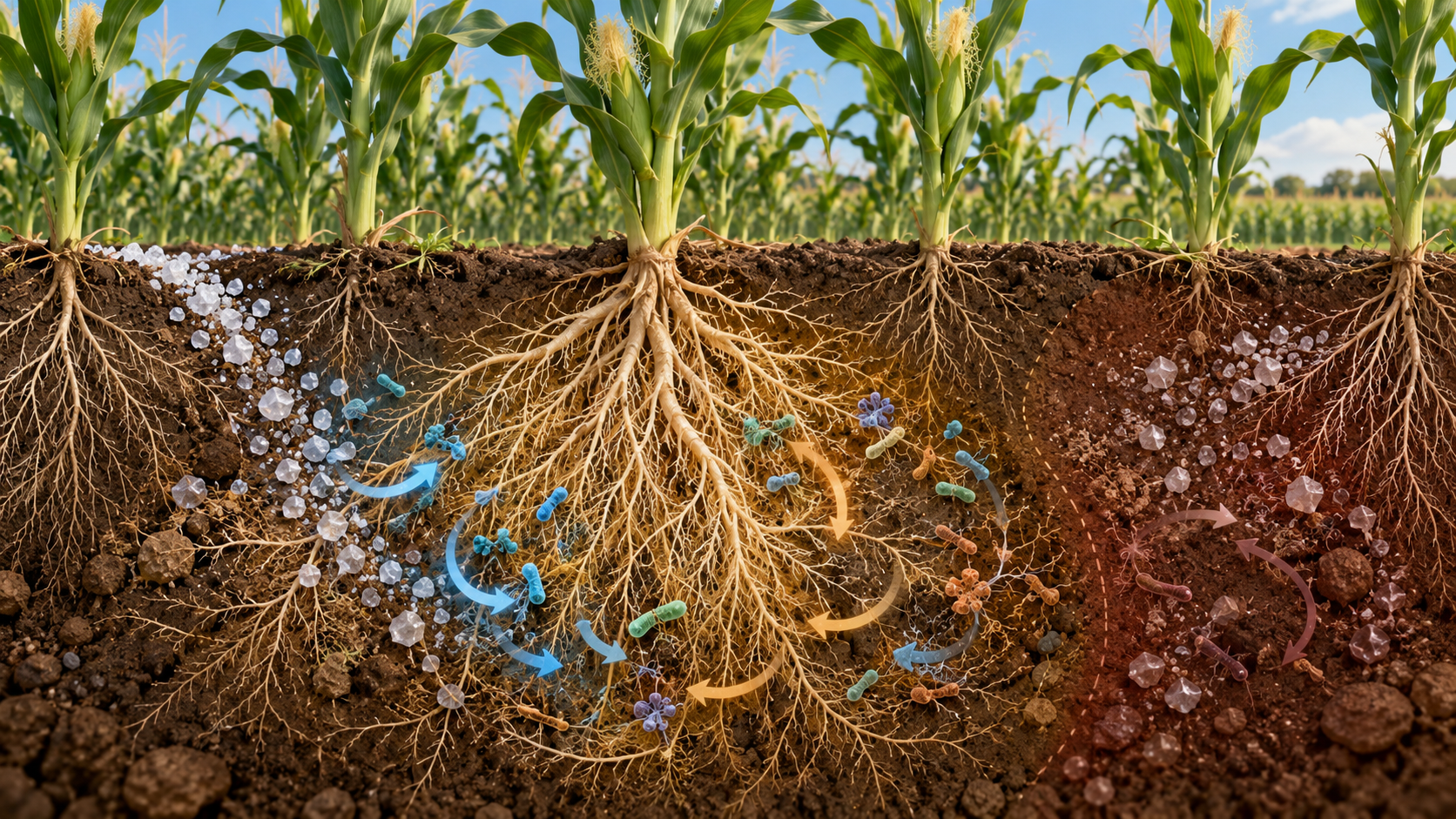
Image: original AI-assisted conceptual illustration created for Agrilinkage. It does not depict Profertil’s existing plant or the proposed expansion.
The proposal would more than double the site’s urea capacity
Profertil says its existing complex can produce about 1.32 million tonnes of urea a year. Adding 1.5 million tonnes would lift total annual capacity to 2.82 million tonnes. The incremental train is therefore about 113.6% as large as the current plant, while the combined site would have roughly 2.14 times its present urea capacity.
The announced capital envelope equates to approximately $1,133 for each tonne of new annual urea capacity. That is a scale comparison, not a forecast of unit production cost or project return. The final capital intensity will depend on engineering scope, inflation, imported equipment, financing, supporting infrastructure and whether the published estimate includes every owner and offsite cost.
Profertil expects a 45-month construction period and says incremental production could begin in 2031. Working backward, that timetable leaves limited room between a mid-2027 investment decision and the start of major construction if the 2031 operating target is to hold.
Engineering has advanced, but the commercial commitment has not
Saipem said on 29 September that Profertil had awarded it an engineering-services contract to support evaluation of the expansion. Saipem is working with Techint Engineering & Construction. The planned process configuration combines Topsoe ammonia technology, Saipem urea technology and Thyssenkrupp Uhde granulation technology.
Those contracts reduce technical uncertainty and help establish a costed design, but they should not be confused with a full engineering, procurement and construction notice to proceed. Financing, gas supply, environmental approvals, tax treatment and the owners’ final return requirements remain decisive.
Bahía Blanca could gain 3.6 million tonnes of new urea capacity
The Profertil proposal is developing alongside Pampa Energía’s separately approved $2.7 billion Fértil Pampa project in the same industrial and port area. Pampa’s plan targets 2.1 million tonnes of annual granular urea capacity and has already received its corporate final investment decision.
If both projects are completed at their announced capacities, Bahía Blanca would gain 3.6 million tonnes of new annual urea production. Profertil and Fértil Pampa together would represent about $4.4 billion of announced investment and approximately 4.92 million tonnes of combined annual urea capacity when Profertil’s existing output is included. This is a scenario calculation, not a forecast that both projects will be delivered on time.
The two projects would compete for engineering labor, contractors, gas, port capacity and financing while also creating shared demand for logistics and specialist services. They could reduce Argentina’s exposure to imported nitrogen fertilizer and create exportable surpluses, but only if domestic gas and transport economics remain competitive through the plants’ operating lives.
The ownership change explains the renewed investment push
Adecoagro acquired a 90% stake in Profertil in December 2025, while Asociación de Cooperativas Argentinas holds the remaining 10%. Adecoagro reported paying approximately $1.1 billion for its controlling interest. The proposed expansion would therefore be a second investment of similar order to the acquisition price, although the project’s eventual financing structure has not been disclosed.
What would confirm that the project is moving from plan to plant
The most important next event is Profertil’s final investment decision in 2027. Other confirmation points include an approved financing package, long-term natural-gas arrangements, environmental permits, a full construction contract, disclosed owner contributions and a formal notice to proceed.
Until those milestones appear, the correct description is a large, technically advancing proposal with municipal support, not a plant already under construction. Its importance lies in what it could do to the regional nitrogen market if the owners convert engineering work into committed capital.
Methodology and disclosure
Agrilinkage calculated capacity multiples, capital intensity and the combined Bahía Blanca scenario from figures published by Profertil, Saipem, Techint, Adecoagro and Pampa Energía. Monetary figures are nominal announced amounts. Comparisons do not adjust for financing costs, inflation or differences in project scope.



Comments