
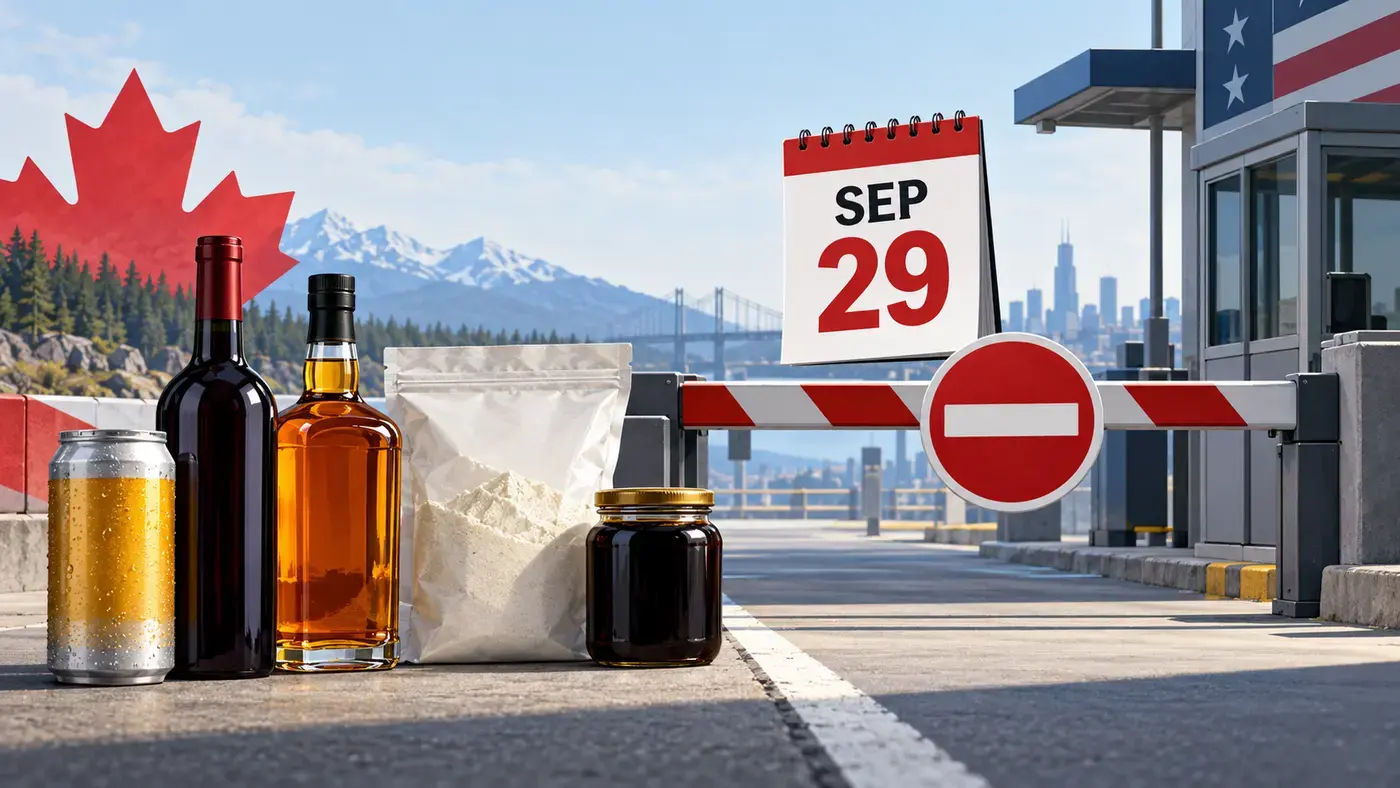
U.S. Import Ban on Canadian Alcohol, Whey and Molasses Is Now in Force
The United States is now excluding a broad set of Canadian alcoholic beverages and selected dairy-related products from importation, turning a tariff dispute into a physical market-access barrier. The measure took effect at 12:01 a.m. Eastern time on September 29, 2026, under two presidential proclamations issued on September 8.
The alcohol annex reaches packaged beer made from malt, sparkling and still wine, cider, sake and other fermented beverages, as well as a long list of spirits including whisky, rum, gin, vodka, liqueurs, bitters, brandy and other beverage spirits. Some tariff lines are limited to products in bottles, cans, boxes, kegs or comparable direct-to-consumption containers, while other listed lines apply without that packaged limitation.
A separate annex covers whey protein concentrates; modified, fluid and dried whey; invert molasses; cane and other molasses; and non-alcoholic beer. The inclusion of molasses and alcohol-free beer in the dairy proclamation reflects customs classification and the design of the measure, not an assertion that those goods are dairy products.
What changed at the border
For the listed goods, the key change is that a higher duty is no longer the principal obstacle for new imports. The products had been subject to an additional 50% ad valorem duty from August 22 after a three-day suspension expired. From September 29, goods imported on or after the effective time are excluded from entry instead.
The transition rule matters for cargo already in the system. The proclamations say covered products imported before September 29 but not yet entered for consumption, or withdrawn from warehouse for consumption, remain subject to the 50% duty rather than the ban. Importers therefore need to establish the import date and exact customs classification before deciding whether a shipment is prohibited or merely heavily taxed.
The White House attributed the action to Canadian restrictions on U.S. alcoholic beverages and to Canada’s administration of tariff-rate quotas for U.S. cheese. Those are the U.S. government’s stated findings. Canada, for its part, announced counter-tariffs of 15%, 25% and 50% effective September 8 on products representing C$27.6 billion of U.S. imports, spanning dairy, agricultural equipment, steel, appliances, pulp and paper, electronics and other goods.
The commercial exposure is larger than a niche dispute
Canadian government statistics put alcoholic-beverage exports to the United States at C$1.4 billion in the fiscal year ended March 31, 2025, up 4.1% from the previous year. That figure is broader than the exact customs lines now banned, so it should not be read as the value of prohibited trade. It does show why the measure reaches beyond a symbolic border action.
For Canadian brewers, wineries and distillers, the immediate choices are to halt affected U.S.-bound shipments, redirect inventory to domestic or third-country markets, or change product and packaging strategies only where customs rules genuinely allow it. U.S. distributors and retailers may need replacement supply from domestic producers or other origins, but contracts, state alcohol rules and brand-specific demand make substitution slower than simply changing a purchase order.
Whey creates a different transmission channel. Whey protein concentrates and other whey products are ingredients used across sports nutrition, infant and clinical nutrition, bakery, confectionery and processed foods. The United States has a large domestic dairy base, yet buyers tied to Canadian specifications or supplier contracts may still face reformulation, qualification and logistics costs.
Molasses is likewise an industrial input as well as a household product. It is used in food manufacturing, fermentation, animal feed and some distilling operations. Whether a particular shipment is covered depends on the listed Harmonized Tariff Schedule subheading and origin rules, not simply on the commercial label applied to the product.
What remains uncertain
The proclamations authorize U.S. Customs and Border Protection to issue the rules, guidance and tariff-schedule changes needed to administer the ban. That leaves operational questions for importers around product classification, goods already moving through bonded channels, and technical corrections to the annexes. Companies should rely on the actual HTSUS line and customs guidance rather than a broad product description.
The measures also contain a fallback: if a court invalidates the import ban in whole or in part for a shipment, the earlier 50% additional duty applies to the affected import. That clause means litigation would not automatically restore duty-free or ordinary-tariff access.
The immediate market consequence is therefore clear even while the wider dispute remains unresolved. Specified Canadian products have moved from expensive access to no access for newly imported goods, while Canadian countermeasures continue on a much larger basket of U.S. exports. The next material development will be either detailed CBP implementation, a negotiated rollback, a further escalation or evidence that trade is being rerouted.


Comments