
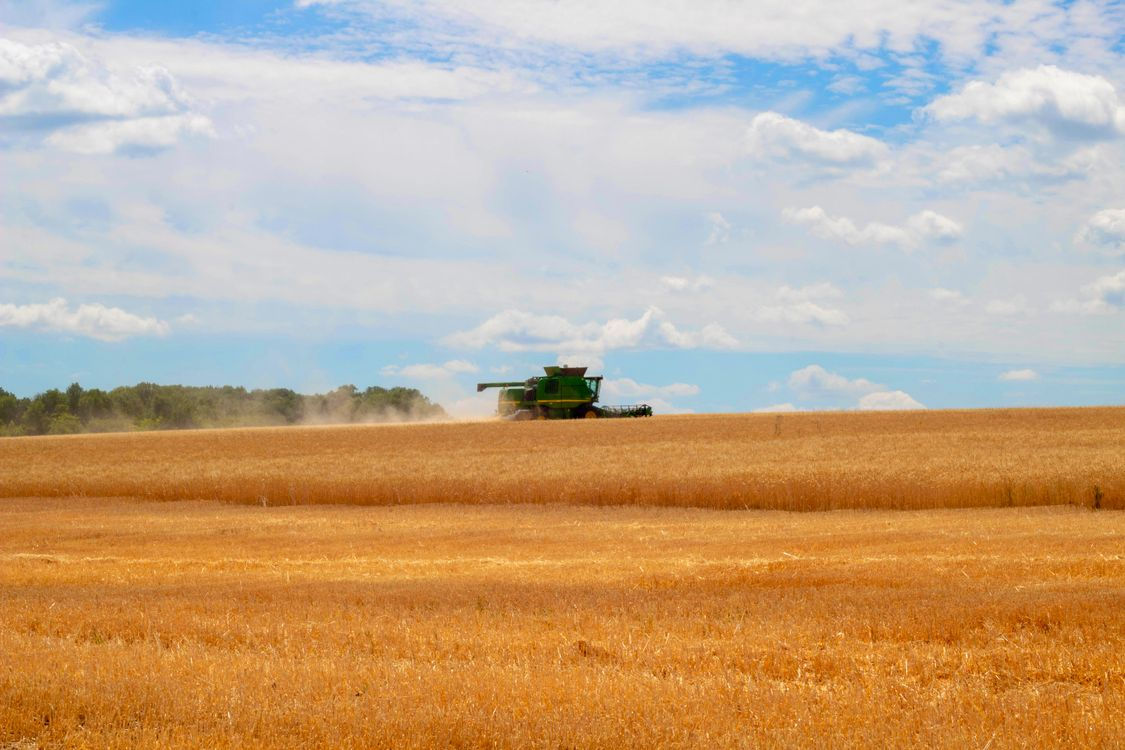
Ukraine Harvest Reaches 35.2 Million Tonnes With 37% of Grain Area Still Standing

Ukraine had harvested 35.174 million metric tonnes of grains and pulses by October 6, according to Agriculture Ministry data, but the headline number is only a partial picture. Farmers had covered 62.7% of the projected grain area, leaving roughly 37% still to be cut, and the corn harvest—the largest late-season swing factor—was only 6% complete.
The snapshot matters beyond Ukraine. The country remains a major Black Sea supplier of wheat, corn and vegetable oils, so the size, quality and movement of its harvest can affect export competition, feed costs and processing margins well beyond its borders. Yet the October total should not be treated as a final production estimate: the crop mix changes sharply as combines move from completed early grains into corn and other late crops.
Wheat is secured; corn is just beginning
Wheat harvesting was complete at 26 million tonnes from 5.11 million hectares, with an average yield of 5.08 tonnes per hectare. Barley was also complete at 6.6 million tonnes from 1.48 million hectares and an average 4.46 tonnes per hectare. Peas reached 823,700 tonnes from 302,100 hectares, averaging 2.73 tonnes per hectare.
Corn was at a very different stage. Farmers had collected 1.623 million tonnes from 294,200 hectares—only 6% of the planned area—at an average yield of 5.52 tonnes per hectare. That makes corn, rather than the already completed wheat harvest, the main reason the national grain total can still rise materially.
The weekly change also illustrates how incomplete the campaign remains. A September 29 snapshot put grains and pulses at 34.3 million tonnes from 61% of planned area, with an average yield of 4.82 tonnes per hectare. By October 6, the volume had increased by about 874,000 tonnes while harvest progress rose by only 1.7 percentage points. Much of that increase came as the corn campaign accelerated, but the early pace is not a safe basis for projecting the final crop.
Oilseeds are only halfway through
Rapeseed harvesting was complete at 3.88 million tonnes from 1.33 million hectares, averaging 2.92 tonnes per hectare. Sunflower was much less advanced: 5.383 million tonnes had been collected from 2.541 million hectares, or 49% of the area, at an average yield of 2.12 tonnes per hectare.
Soybean harvesting stood at 1.89 million tonnes from 851,400 hectares, or 53% of the planted area, with an average yield of 2.22 tonnes per hectare. The unfinished sunflower and soybean campaigns matter directly to crushers, animal-feed buyers and vegetable-oil exporters because the timing and regional quality of incoming seed influence plant utilization, procurement premiums and export availability.
Sugar beet harvesting had only started. Farmers reported 824,600 tonnes from 16,300 hectares, equal to 10% of the area, with a high early average yield of 50.65 tonnes per hectare. As with corn, early beet yields can change as harvesting spreads into different regions and soil conditions.
Regional numbers show a wide production gap
Odesa had the largest early-grain volume at 5.6 million tonnes, followed by Dnipropetrovsk at 2.79 million tonnes and Mykolaiv at 2.67 million tonnes. The highest average grain yields were reported in Khmelnytskyi at 7.02 tonnes per hectare, Sumy at 6.26, Ivano-Frankivsk at 6.01 and Vinnytsia at 5.93.
Those figures should not be read as a simple ranking of farm performance. Regional crop mixes differ, while weather, soil, input use and the share of harvested area all influence interim averages. Wartime operating conditions also vary substantially by location, affecting access to land, labor, machinery, storage, power and transport.
Why the final number still depends on logistics
Ukraine’s Economy Ministry has preliminarily estimated the combined 2026 grain and oilseed harvest at 81 million to 83 million tonnes, including 60 million to 61 million tonnes of grain—roughly in line with the previous year. That estimate is a forecast, not a completed result, and the remaining corn, sunflower and soybean harvests will determine how close production comes to it.
Production is only the first half of the market equation. Grain must also be dried, stored, financed and moved to domestic processors or export corridors. A larger crop can pressure local basis levels if storage or transport capacity tightens, while smooth port and rail operations can help translate field output into export supply. For international buyers, the operational question is therefore not simply how much Ukraine grows, but how much can be delivered, at what cost and on what timetable.
The next useful signals will be the pace and yield of the corn harvest, the finishing yields for sunflower and soybeans, regional weather during fieldwork, grain moisture and quality, and any change in export logistics. Until those data arrive, the confirmed conclusion is narrower than the headline: Ukraine has secured its wheat and barley crops, but a substantial share of its 2026 grain and oilseed outcome is still standing in the field.


Comments