
Study Finds Tailored Crops and Livestock Lift Income Across 240 Rainfed Farms in India

A five year intervention across 240 rainfed farm households in the lower Shivalik foothills of Punjab found that packages tailored to different farm types were associated with large income gains, stronger soil fertility and lower greenhouse gas intensity per unit of income in some systems.
The study published in Scientific Reports on 18 November 2026 grouped households into five farm types using land, livestock and income characteristics. Researchers then applied different combinations of improved crop varieties, diversification, livestock integration, vermicomposting, farm ponds, moisture conservation and small enterprises.

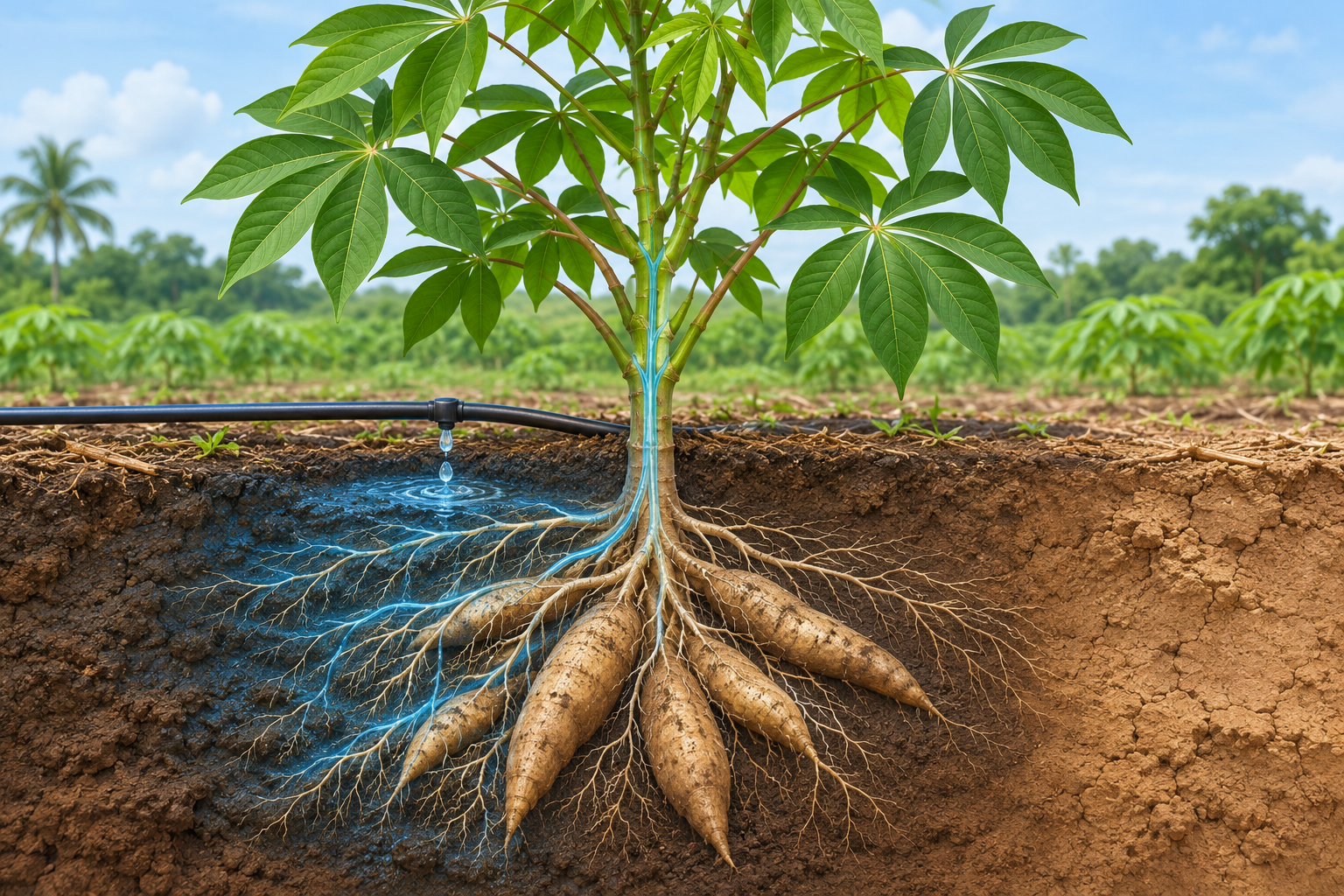
Original Agrilinkage editorial illustration created with artificial intelligence. It is not a photograph of the farms or participants in the study.
A farm type approach rather than one package
The central idea was that rainfed farms are not interchangeable. A household with little land and several small ruminants has different constraints from a farm with more cropland, cattle and access to water. The researchers therefore classified farms before selecting interventions.
This matters because many agricultural programmes distribute a single technology across highly varied households. A seed variety may raise yield but do little for a family whose main constraint is livestock feed, water storage or lack of cash between harvests. A combined package can address several limits at once, although it is harder to identify which component produced each gain.
The five year duration also improves on a single season demonstration. It allowed crop changes, livestock enterprises, soil management and water structures to operate across varying weather and market conditions. Even so, the study should be read as evidence from a defined region and programme, not as a universal forecast for all rainfed farms.
The income results
The study reports net income increases of 557 percent, 431 percent, 638 percent, 437 percent and 184 percent across the five farm types. Those are relative changes within the participating groups, and the range shows why the starting structure of each farm matters.
Very large percentage gains can occur when baseline cash income is low and several new enterprises are introduced together. The percentages should not be translated directly into national income forecasts. Replication costs, labour requirements, local prices, access to buyers and the durability of gains after project support all affect what another household could achieve.
The broad economic lesson is more robust than any single percentage. Diversifying sources of farm income can reduce dependence on one rainfed crop and create revenue at different points in the year. Livestock, vegetables, compost and other small enterprises can also turn crop residues and household labour into productive assets.
Soil and emissions results
Across the study, soil organic carbon rose by 11.5 percent. Available nitrogen, phosphorus and potassium increased by between 10.7 percent and 14.1 percent. These changes are consistent with the use of organic inputs, better residue cycling, livestock integration and moisture management described in the intervention packages.
Higher soil organic carbon can support soil structure and water holding capacity, which are valuable in rainfed systems. The result does not mean the farms became immune to drought. Soil gains depend on continued management, and the study abstract does not establish how long the changes would persist if practices stopped.
The researchers also report that greenhouse gas intensity per unit of income was lowest in small ruminant based rainfed systems. That indicator measures emissions relative to economic output rather than total emissions. A farm can improve intensity by raising income faster than emissions, even if its absolute emissions do not fall.
Why the packages may have worked
Several mechanisms can reinforce one another. Improved varieties can raise output within the existing crop area. Diversification spreads weather and price risk. Ponds and moisture retention can extend the useful period of limited rainfall. Livestock can convert biomass into saleable products and manure. Vermicompost can return nutrients and organic matter to soil. Small enterprises can improve cash flow between main harvests.
The interaction among components is also a research limitation. Because the packages differed by farm type and included several changes, the published abstract does not allow a clean estimate of the independent contribution from each practice. The results describe whole farm transformation more clearly than the return from any single input.
Limits that matter for replication
The study covered 240 households in one agroecological setting. Lower Shivalik rainfall, soils, market access and household labour patterns may differ from those in central India, the Deccan plateau, Africa or other rainfed regions. Any transfer should begin with local farm classification and a costed adaptation, not a direct copy.
The reported gains also reflect an intervention period with researcher or programme support. Decision makers need to know the capital cost of ponds and livestock, the value of training and extension, additional labour, credit needs, market capacity and whether households maintained the practices after intensive support ended.
The abstract does not describe a randomized design. Without random assignment and a comparable untreated group, outside forces such as prices, rainfall or wider economic change can contribute to observed income differences. The five year evidence is useful, but it should not be presented as proof that every component caused every gain.
What this means for rainfed investment
For extension services, the study supports a diagnostic approach. Classify farms by assets and income sources, identify the most binding constraints, and combine interventions that fit the household rather than distributing one input to everyone.
For lenders and public programmes, the results point to the need for staged finance. Water structures and livestock require early capital, while soil benefits accumulate more slowly. Repayment schedules and grants should reflect the timing of each enterprise rather than assume one annual crop cycle.
For farmers, the practical test is cash flow after all costs. A package is valuable only if added revenue exceeds the cost of animals, seed, structures, feed, labour and maintenance, and if buyers exist for the additional output.
What to watch next
The next useful evidence would include absolute income and cost figures by farm type, attrition among participating households, yearly rainfall and price conditions, a clear comparison group, and results after project support ends. Replication in other rainfed zones would show which elements are broadly transferable and which depend on Punjab conditions.
The study’s strongest contribution is not a promise of identical percentage gains elsewhere. It is evidence that matching crops, livestock, water and soil practices to distinct farm structures can outperform a uniform recommendation and can improve both economic and soil outcomes over several years.
Source and methodology
Agrilinkage reviewed the open access Scientific Reports article and its stated methods and results. The article is licensed under Creative Commons Attribution NonCommercial NoDerivatives terms. Agrilinkage did not reuse or adapt its figures or images. No interviews or firsthand farm observations were used.


Comments