
The Rwandan Coffee of Aloys Rubayiza: Terroir Excellence Meets Fair Trade

Updated: 7 days ago
A food technology PhD turned coffee grower, Aloys Rubayiza decided to bet on an exceptional coffee grown in the highlands of Rwanda. We met him at the Paris International Agricultural Show, where he told us about the model he has been building, one bean at a time.

Some career changes feel less like a new direction and more like going back to where you belong. Aloys has a doctorate in food technology from Belgium. He could have stayed there and built a comfortable academic career. Instead, he went back to Rwanda, got his hands in the soil, and started growing coffee. The same coffee his family had always grown, but this time with a scientist's eye, a businessman's mindset, and one idea he kept coming back to: the people who grow something exceptional should be the ones who benefit from it.
Today he is in Paris, at the International Agricultural Show, looking for distributors, buyers, and above all partners who understand what he has built.
A Scientist Among the Coffee Trees
Aloys grew up in a family of small coffee farmers, in a country that has been growing coffee for generations without seeing much of the money it generates. After his doctorate in Belgium, he came back home with a clear goal: use what he had learned to get more value out of what Rwanda's land produces. He spent ten years teaching at university and studying how to trace coffee scientifically, figuring out through molecular analysis whether a bean was Arabica or Robusta, where it came from, and at what altitude it was grown. Then he decided it was time to actually do something with all of that.
"The original idea was to add value to coffee as close to production as possible, so that growers could earn a better living." Aloys Rubayiza, Founder, Kawa Rwanda
He set up his own company, took over a five-hectare family plantation in the highlands, and partnered with about a hundred small local farmers. Together they produce between 20 and 40 tonnes of coffee a year, which makes Kawa Rwanda a serious option for European and African buyers. It is not just a farm anymore. It is a full supply chain.
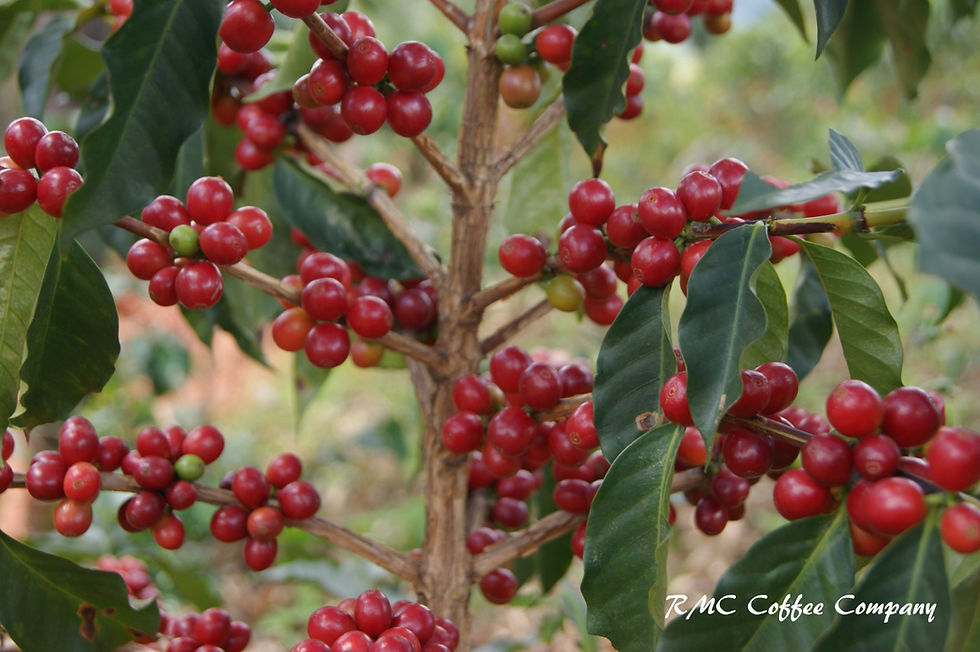
Rwanda's Red Bourbon: Rare and Worth It
To understand why Rwandan coffee deserves attention, you need to know a little about the plant. There are around 160 coffee varieties in the world, but two dominate the market: Arabica, grown at altitude, and Robusta, which grows on the plains and has more caffeine. Rwanda is a mountainous country, rarely below 1,500 metres, and it grows exclusively Arabica.
The specific variety Aloys grows is called Red Bourbon. It is an old Arabica sub-variety that does well in Rwanda's landscape, and it produces small amounts of really good beans, fruity, floral, and complex. Flavors that newer, more productive varieties simply cannot replicate. Each tree gives about 200 grams of coffee per season, while hybrid varieties can give two or three kilos. That is a big difference. But that is the whole point: Aloys chose quality over volume, and that is not changing.

"We produce very little coffee, but of very high quality. That's why we try to get the most out of it." Aloys Rubayiza, Founder, Kawa Rwanda
The trees grow between 1,800 and 2,000 metres above sea level. The cool air at that altitude slows down how the cherries ripen, which is what concentrates the flavor. Rwanda only produces 0.2% of the world's coffee, about 20,000 tonnes a year. Aloys himself calls that number insignificant on a global scale, but it also means that good Rwandan coffee is genuinely hard to find, which is precisely what makes it valuable.
Four Regions, One Country
Rwanda does not have just one terroir. It has four main coffee-growing regions: north, south, east, and west, each with different soil, different microclimate, and different flavors in the cup. Aloys is working to sell them as separate origins, the way a winemaker distinguishes between plots, building toward a protected geographical indication. That project is currently in development, and it would eventually allow buyers to choose not just Rwandan coffee, but coffee from a specific Rwandan region.

For roasters and importers who need something that stands out, that is a real opportunity. Specialty coffee is built on the ability to tell exactly where something comes from. Kawa Rwanda can do that.
Harvest Time: Three Months, Two Hundred People, 80% Women
Coffee is harvested once a year, over three months. During that period, Aloys brings in about 200 people to pick, process, and dry the cherries. Every cherry is picked by hand, one at a time, selecting only those at perfect ripeness. It is slow, careful work, and it is a big reason why the coffee tastes the way it does.
Eight out of ten of those seasonal workers are women. Rwanda is still living with the consequences of the 1994 genocide, which killed a disproportionate number of men. In the years after, women stepped up, running homes, farms, businesses, and eventually political institutions. Today they hold a majority in Rwanda's parliament and are central to community cooperatives across the country.
"When you put money in a woman's hands, you feed the whole family. That's really what we want to talk about." Aloys Rubayiza, Founder, Kawa Rwanda
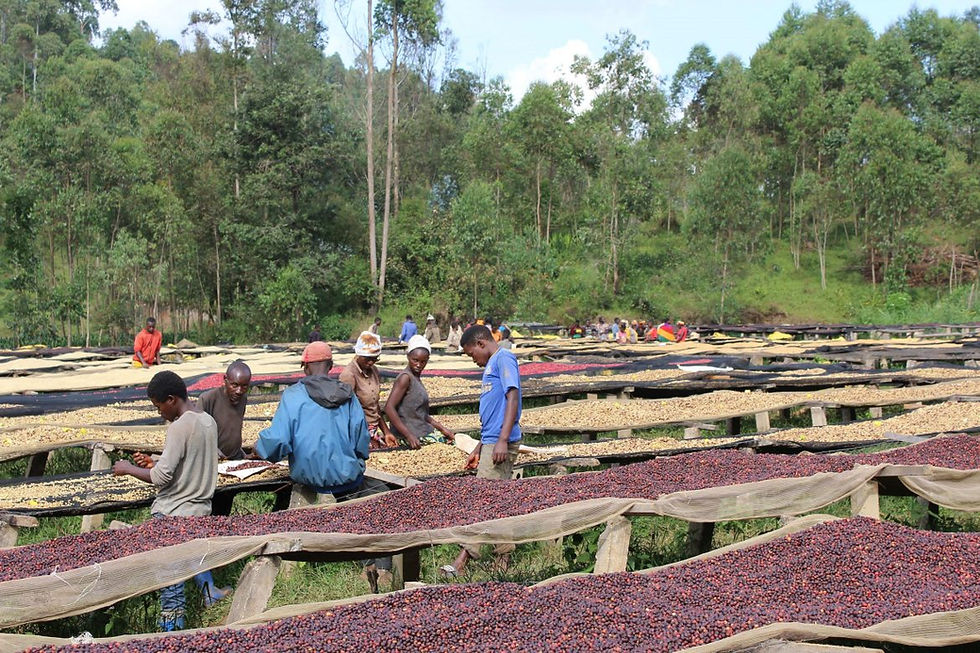
For Aloys, paying women fairly is not something he does to look good. It is simply what he believes in. And for any buyer who cares about where their money goes, it is something concrete and measurable.
Certified, Documented, Ready to Export
Kawa Rwanda holds fair trade and organic certifications at the local level, earned through rigorous auditing of farming practices, full supply chain traceability, and pay standards in line with international benchmarks. Every batch ships with a certificate of origin from a Rwandan government body, quality certificates from accredited labs, and all the phytosanitary paperwork required for export.
The one real obstacle, and Aloys is honest about it, is the double organic certification that the European market requires. Being certified organic in Rwanda is not enough. A separate European-standard certification is also required, and that costs significantly more, which is a real burden for a small producer. It is a well-known structural barrier for importers who work with producers from the Global South, and one that some of them are well placed to help with. Aloys has already handled the full logistics chain, getting the coffee out of Rwanda and into Europe. He is now looking for the last piece.
Not Just Beans
Most African coffee exporters sell green coffee and stop there. Aloys sells roasted whole beans, ground coffee, Nespresso-compatible capsules in biodegradable packaging, and Dolce Gusto-compatible capsules. That means a buyer can put this coffee straight on a shelf without needing an intermediary roaster. It comes with a real story, it is certified, traceable, and genuinely different from most of what is already out there.

Already in Europe, Now Targeting France
Kawa Rwanda is already sold in Belgium, Poland, Norway, and Luxembourg. The Poland deal came directly out of a tasting at a trade show. Last December, a commercial trip to Morocco opened up promising new contacts. Current volumes travel by air, which weighs on margins, but Aloys is already thinking ahead. In a few years, production should reach a level where shipping by sea in a 20-tonne container becomes viable, which will bring costs down considerably.
France is the priority now. Big market, strong coffee culture, and a growing number of consumers who care about where their coffee comes from and how it was traded. Aloys is looking for one or more distributors who can bring Kawa Rwanda into French specialty retail, upscale restaurants, or e-commerce.
"I'm really looking for strong distributors here in France. France is a big country with a wonderful coffee culture." Aloys Rubayiza, Founder, Kawa Rwanda
Kawa Rwanda is for importers, roasters, distributors, and restaurants looking for a high-altitude Arabica that is rare, certified, and comes with a story worth telling. Between 20 and 40 tonnes a year, including partner farmers, is enough to supply serious accounts while keeping it firmly in specialty territory. Full traceability from field to packaging. Red Bourbon variety, grown high, picked by hand, by a workforce that is 80% women. Available as whole beans, ground, or in Nespresso and Dolce Gusto-compatible capsules.
This article is part of AgriLinkage's producer portrait series, based on an interview conducted at the Paris International Agricultural Show.


Comments