

Record U.S. Summer Heat Leaves 59.1% of the Country in Drought

Updated: Oct 7
The contiguous United States recorded its hottest meteorological summer in 132 years of records, creating a difficult production backdrop as drought spread across major farming and ranching regions. NOAA says the June through August 2026 average temperature reached 74.4 degrees Fahrenheit, three degrees above the twentieth century average.
August alone averaged 75.6 degrees Fahrenheit, the warmest August in the national record. Daytime maximum temperatures averaged 88.6 degrees, while California, Nevada, New Mexico and Colorado each set records for their warmest August average temperature.
The heat coincided with uneven rainfall. National precipitation for August averaged 2.30 inches, about 0.32 inch below the twentieth century average and the driest August since 2000. Texas and Oklahoma received less than 30 percent of their normal August rainfall.
By September 1, drought covered 59.1 percent of the contiguous United States, an increase of about 10.5 percentage points from early August. NOAA reported persistent or intensifying drought across the interior West, northern Plains, Upper Midwest, southern Plains, Lower Mississippi Valley and Deep South.
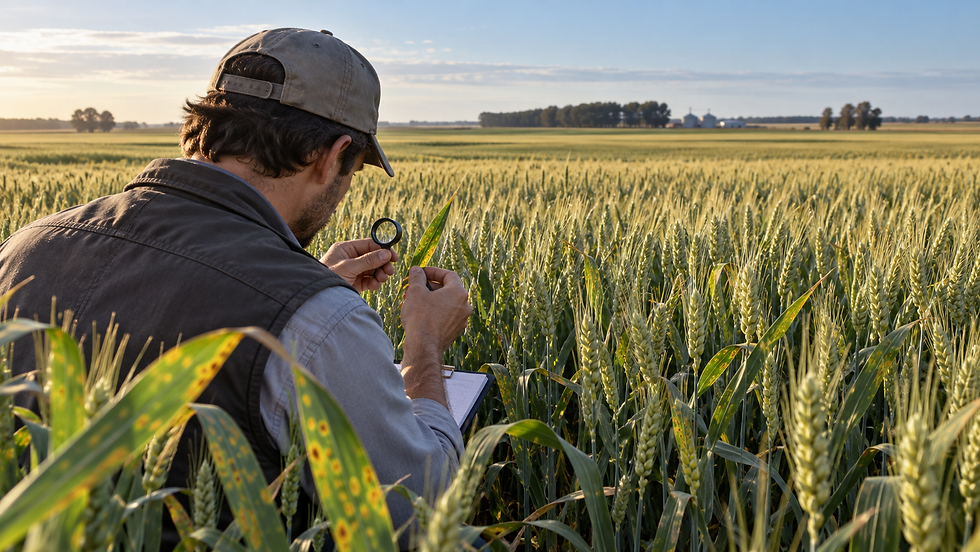
For agriculture, the impact is rarely uniform. Heat and moisture deficits can reduce pasture growth, increase livestock water demand, accelerate crop maturity and raise irrigation costs, while wetter pockets can still face harvest delays or disease pressure.
The distribution of rainfall was especially uneven. Indiana and Ohio recorded their wettest August, while Texas and Oklahoma ranked among their driest. That divergence complicates national commodity assessments because crop conditions can move in opposite directions within the same reporting period.
NOAA's September outlook favored above average temperatures across much of the country and further drought development from the southern and central Plains into the middle Mississippi Valley. Persistent dryness in those areas would matter for winter wheat establishment, grazing conditions and regional feed availability.
The commercial question is how much of the weather shock becomes a yield, quality or logistics problem. Commodity buyers should watch harvest reports, river conditions, pasture ratings and local basis movements rather than treating a national drought percentage as a single forecast for every crop.


Comments