
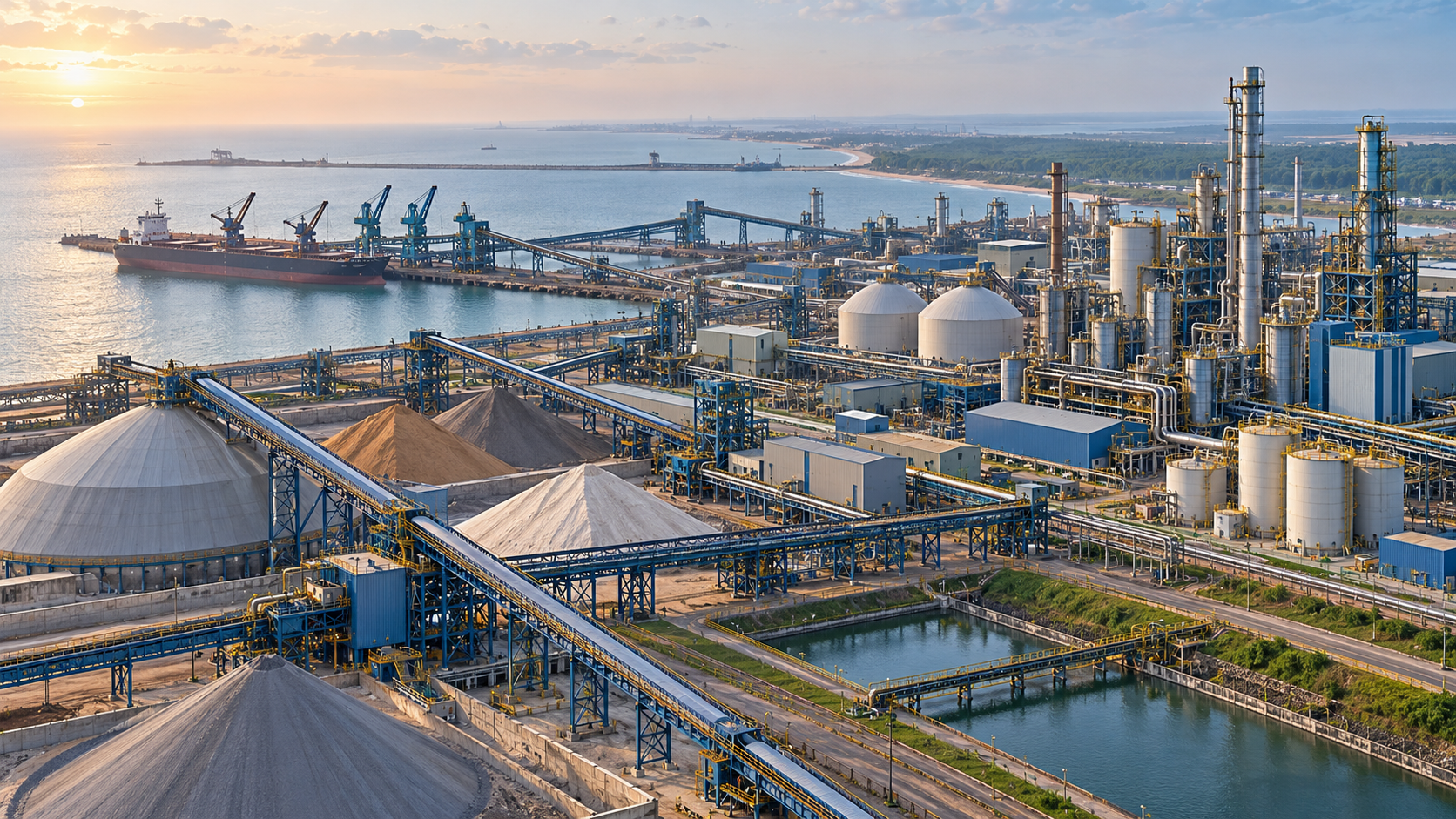
Paradeep Phosphates Raises Odisha Investment Intent to ₹47.5 Billion

Paradeep Phosphates Limited has signed a memorandum of understanding with the Government of Odisha that states an intention to invest ₹4,750 crore—₹47.5 billion—in new chemical and fertilizer facilities in the state. The agreement was signed on October 22, 2026, during India Chem 2026 in Mumbai; the company notified India’s stock exchanges on October 23 through a Regulation 30 filing and attached press release.
The amount is large enough to matter for India’s phosphatic-fertilizer chain, but the disclosure is an investment memorandum, not a final investment decision or a construction notice. It names no site, product slate, output capacity, commissioning date, financing plan or implementation milestones. The most useful reading is therefore not that ₹47.5 billion of capacity is already being built, but that Paradeep Phosphates has raised the scale of its stated Odisha ambition while leaving the industrial configuration unresolved.

The new figure is higher—but the relationship to the old plan is unclear
Paradeep Phosphates’ 2024–25 annual report recorded an earlier ₹4,000-crore Odisha memorandum. The company said that prior plan was expected to create 100–150 direct jobs and as many as 1,000 indirect jobs. In a May 2025 earnings call, management described the expenditure as phased and pointed first to phosphoric acid, sulphuric acid and dry-gypsum projects already in its pipeline.
The October 2026 amount is ₹750 crore above that earlier figure, an increase of 18.75%. That calculation is straightforward; the interpretation is not. The new filing does not say whether ₹4,750 crore supersedes the ₹4,000-crore memorandum, adds a separate program, or incorporates projects that have already advanced. Treating the two figures as cumulative would therefore overstate what the company has disclosed.
Disclosure | Stated amount | What was disclosed |
2024–25 annual report | ₹4,000 crore | Earlier Odisha investment memorandum; management later linked the near-term pipeline to acid and dry-gypsum projects |
October 22, 2026 memorandum | ₹4,750 crore | New chemical and fertilizer facilities in Odisha “in coming years”; no capacity, site or timetable disclosed |
Existing scale makes the proposal strategically relevant
Paradeep Phosphates is already one of India’s largest phosphatic-fertilizer producers. Its February 2026 results release put annual fertilizer capacity at 3.7 million tonnes across Paradeep in Odisha, Goa and Mangalore. The company produces diammonium phosphate, multiple NPK grades and urea.
At Paradeep, the company’s annual report lists 1.8 million tonnes of DAP and NPK capacity, 1.39 million tonnes of sulphuric acid capacity and 0.5 million tonnes of phosphoric acid capacity. It also describes a program to lift phosphoric-acid capacity first to 0.7 million tonnes and ultimately to 1 million tonnes, supported by sulphuric-acid additions. Those projects matter because phosphoric acid is a core intermediate in phosphate-fertilizer production and greater internal supply can reduce dependence on purchased acid.
That context makes acid capacity a plausible part of the new investment logic—but only a plausible part. The October filing uses the broad phrase “chemical and fertilizer facilities” and does not identify phosphoric acid, sulphuric acid, finished fertilizer, biofertilizer or any other individual product. Agrilinkage is not assigning a product mix the company has not disclosed.
Port access is an advantage, not proof of economics
The existing Paradeep complex has a captive berth, a 3.4-kilometre conveyor and a 3.1-kilometre pipeline, according to the annual report. That infrastructure can lower handling friction for imported sulphur, phosphate rock and ammonia-related inputs while supporting movement of finished fertilizer. Odisha’s east-coast position also places the complex near maritime supply routes and major agricultural markets.
But logistics alone do not establish project returns. Phosphatic-fertilizer economics remain exposed to raw-material prices, exchange rates, freight, regulated subsidy formulas, plant utilization and the timing of government reimbursements. Any new facility would also require clarity on water, power, environmental approvals, feedstock contracts and integration with the existing complex.
What would turn the memorandum into an investable project
The next meaningful disclosure is not another headline investment figure. Investors, suppliers and fertilizer buyers need five operational details: the exact site; the split between chemical intermediates and finished fertilizer; nameplate capacity by product; board-approved capital allocation and financing; and a permitting, construction and commissioning schedule.
A final investment decision, major equipment order, environmental clearance or construction contract would materially strengthen the project’s credibility. Until then, the ₹47.5-billion figure is best understood as a higher statement of intent from a company with a substantial operating base—not as additional production already secured for India’s fertilizer market.
Methodology and sources
Agrilinkage compared the company’s October 2026 stock-exchange disclosure with its official 2024–25 annual report and February 2026 operating update. The ₹750-crore difference and 18.75% increase are Agrilinkage calculations. Company documents are available through the Paradeep Phosphates investor-relations page. No interviews or site visits were conducted for this article.



Comments